Following Tosho Filipovski’s criticism of the exclusion of music releases from state support, the question is what concrete action should follow. Germany, France and Norway already use solutions we can adapt: release funds, promotional assistance, recording preservation and tax relief.
Music journalist and chronicler Tosho Filipovski warns that, according to his post, music releases have been excluded from the Ministry of Culture and Tourism’s funding calls for the third year running. The country’s few record labels find it increasingly difficult to release new albums, reissue old recordings and rescue archival material.
“Not because we have no music. But because releasing it is becoming economically unsustainable,” Filipovski writes.
The consequences go beyond the fate of a single album. When independent labels close, knowledge, contacts and continuity disappear. Unprocessed tapes deteriorate, while some of today’s creative work goes without proper documentation.
We have already written about the consequences of past institutional neglect in “The ‘Write and Erase’ System: How We Turned Our Own History into Disposable Material”, through examples of erased television and music recordings. The lack of support for releases carries a related risk: some of the music we create today may remain undocumented for future generations.
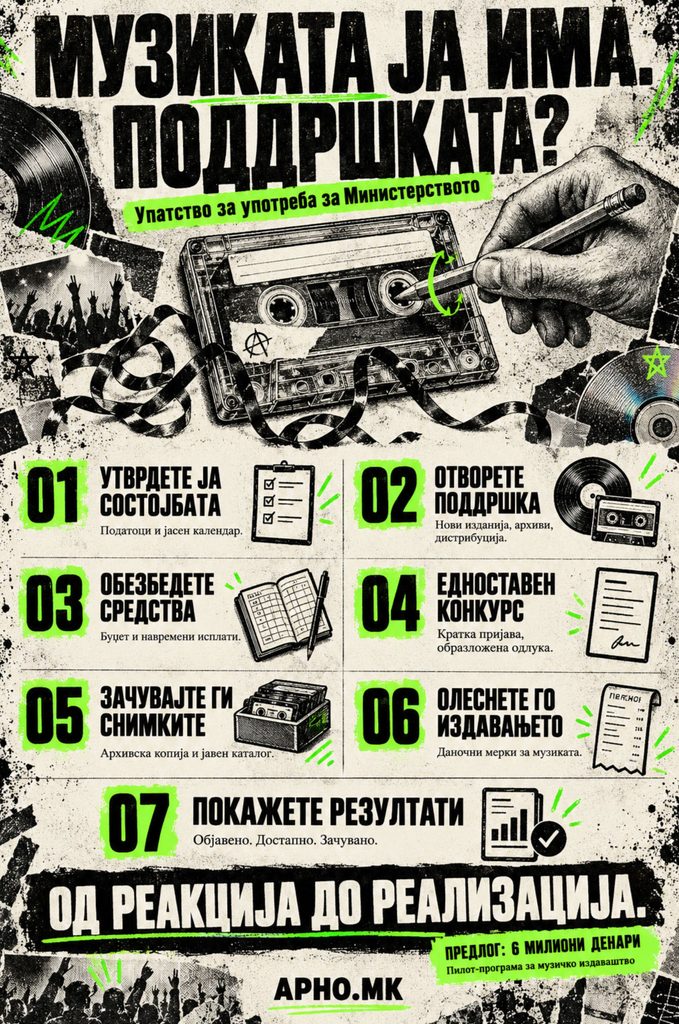
But let us move from “what we have (not) done” to “what we should do”. The answer should be a programme with a budget, deadlines and verifiable results. The good news is that we do not have to reinvent the wheel: the models already exist; we need to adapt and implement them.
What Can We Learn from Other Countries?
In Germany, Initiative Musik supports recording, the production of physical music formats, promotion, marketing and touring. According to its 2024 report, the programme supported 533 music projects with €4.9 million. This figure covers a range of activities, not just physical releases.
In France, the National Music Centre, CNM, provides dedicated support for recorded music production. Its aims include developing new talent and reducing producers’ financial risk. Assessment considers the project’s financial plan, strategy and professional readiness.
In Norway, “Musikk – publisering” supports new releases in all genres, available digitally and/or physically. Applications are submitted after release, within six months. Another scheme for special recording projects supports certain categories of music with a particular need for assistance or value to music history.
These are mechanisms already in use that we can learn from. The stages, amounts and percentages below are our proposal for Macedonia, rather than rules copied from foreign schemes.

1. The First 30 Days: Establish the Facts
The Ministry should publish where and under what conditions labels can obtain support. If support is lacking, a plan for a dedicated budget line is needed.
- Review the last three funding rounds: funding for recording, physical releases, reissues and archival work, separately from concerts and festivals.
- A brief public consultation: with independent labels, musicians, studios, chroniclers and institutions that preserve sound recordings.
- A timetable: dates for publishing the rules, opening the call, making decisions and paying grants.
The consultation should produce a publicly available proposal explaining which comments were accepted or rejected and why.

2. Within 90 Days: Prepare Three Funding Streams
A. New Music Releases
Eligible costs should include recording, fees, mixing and mastering, design, physical production and digital distribution.
Musicians who release their own music should also be able to apply through an appropriate permitted legal form. Debut artists should have access without being required to have a previous release catalogue.
The choice of format and production run should be justified for each project. Vinyl, CDs or cassettes should be supported where there is an audience and a sound rationale for the release, with a realistic distribution plan.
B. Archives, Reissues and Unreleased Recordings
This funding stream should cover digitisation, restoration, research into authorship, rights clearance and the preparation of accompanying documentation.
The Norwegian example offers the principle of giving special attention to documenting music history. The Macedonian programme should explicitly include the country’s rock, punk, jazz, electronic and other scenes.
Priority should go to the only surviving copies, recordings at risk of deterioration and materials with substantiated historical value. Sales potential should carry less weight here.
C. Promotion and Distribution
Support should cover delivery to shops and distributors, promotional materials, media relations and presentations to foreign labels.
A separate application window could be introduced for recent releases, following Norway’s example of post-release support. Conditions should include verifiable costs and a ban on funding the same invoice twice.
3. Funding That Can Actually Be Used
Assistance must also be accessible to a label that cannot afford to pay for the entire project upfront. As an initial model, we propose:
- Up to 70% of eligible costs for a new release, with confirmed sources for the remainder.
- Up to 90% for priority archival projects, where public interest is high and expected revenue is low.
- An advance of 70% of the approved grant, with the balance paid after acceptance of the report, within the applicable budget rules.
- An annual cap per recipient and related entities, to distribute funds more widely.
For the first year, a pilot budget of six million denars could be considered:
| Purpose | Proposed Amount |
|---|---|
| New music releases | 3,000,000 denars |
| Archival projects and reissues | 2,000,000 denars |
| Promotion and distribution | 1,000,000 denars |
| Total | 6,000,000 denars |
Final amounts and per-project limits should be set after assessing actual costs and the sector’s needs.
4. A Simple Application, a Reasoned Decision
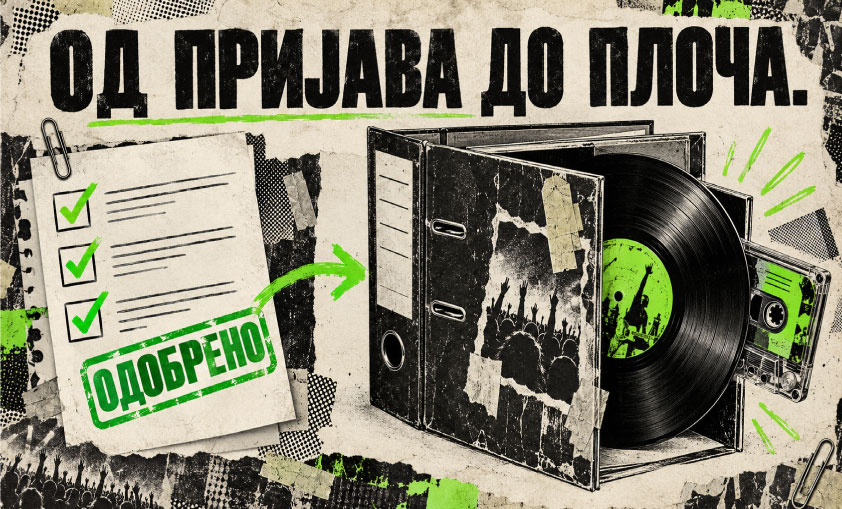
For smaller grants, a short application should suffice: a description and audio samples, a budget with quotations, evidence of rights, a completion deadline and a plan for making the release available.
The German process includes advice for applicants and a standard opportunity to supply missing information during the formal review. This practical solution could be adopted directly.
For the domestic programme, we propose:
- At least two calls a year, with deadlines announced in advance.
- Decisions within 60 days and a published payment schedule.
- A panel with a range of expertise, including record releases and archival work.
- Disclosure of conflicts of interest and recusal from assessing related projects.
- Public scores and a brief explanation for every decision.
Criteria should be tailored to each funding stream: a new album should be assessed on its artistic proposal and feasibility; an archival project should also be judged on its historical importance and the risk of loss.
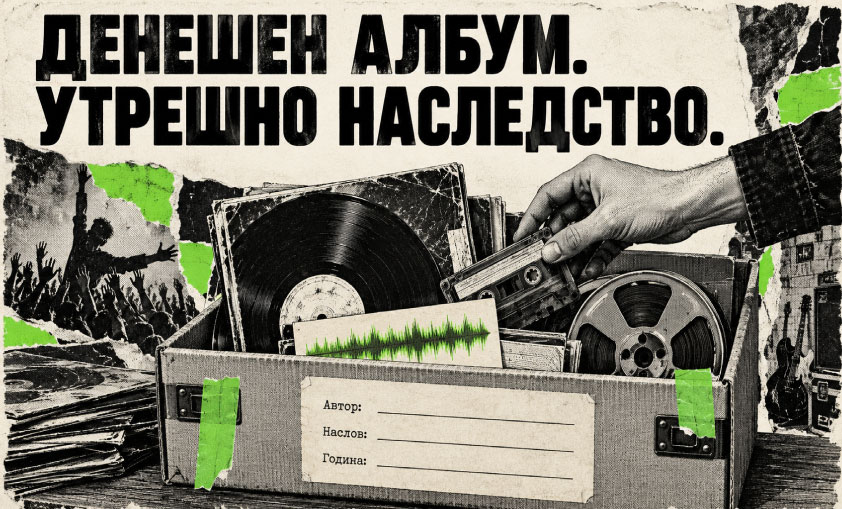
5. Every Release Should Leave a Preserved Record
The National Library of Norway collects physical and digital publications, including music, for long-term preservation and use under specified conditions for documentation and research.
The Ministry, the National and University Library and the relevant institutions should agree on a procedure that ensures:
- deposit of physical copies in accordance with applicable obligations;
- an archival-quality digital copy;
- preservation of the cover, booklet and full credits and recording details;
- a public catalogue record indicating where the release is available.
Archival deposit does not mean transferring copyright or requiring free online access. The agreement should clearly set out the conditions for preservation, research access and commercial use.
6. By the End of the First Year: Propose Tax Measures
Filipovski also points to the difference between VAT on physical music formats and books. The Ministry of Culture, together with the Ministry of Finance, should calculate the impact of a possible lower rate on prices, labels and budget revenue.
It is also worth considering the French tax credit for recorded music production, which promotes creativity and musical diversity, particularly among small businesses.
The two measures work differently: lower VAT changes taxation at the point of sale, while a tax credit encourages investment in production. A solution suited to domestic conditions should be chosen alongside the preparation of the grants.
7. After 12 Months: Publish the Results
The annual report should show what public money has delivered:
- completed releases and their availability;
- debut artists and independent labels supported;
- archival recordings processed and preserved;
- the time taken for procedures and payments;
- projects not completed and the reasons why.
Sales and listening figures are useful indicators, but the value of rescuing a unique recording also requires expert assessment.
The first step could be immediately verifiable: within 30 days, the Ministry should publish a response to Filipovski’s criticism, a review of support provided so far and a timetable for preparing the programme. We could then discuss concrete rules, funding and results.