The exhibition “The First. Women Among Men” at the Museum of Contemporary Art – Skopje raises questions about the presence of women in our art history. For me, one name among the artists holds particular significance: Nada Korda Sima, my grandmother.
Some names first become familiar to us within the family. We encounter them on the back of a photograph, in the conversations of older relatives, or in the signature on a painting that has hung on the wall for years. Only later do we begin to ask where they belong in the wider story of the time in which they lived.
For me, that name is Nada Korda Sima. I never met her: she died in 1959, many years before I was born. I came to know her through her work, photographs and family stories. Now she is among the artists included in the research project and group exhibition “The First. Women Among Men”, curated by Ivana Vaseva at the Museum of Contemporary Art – Skopje.
This brings me personal joy, but it also invites something broader: to pause at a name and ask what kind of life, aspirations and work lie behind it.
The Desire to Study Art
In my personal essay “No Woman’s Land – My Mother’s Homeland”, I recorded part of Nada’s family story. She came from the Czech Korda family. Her father was an industrialist, and the family had the means to support her education. She wanted to study art.
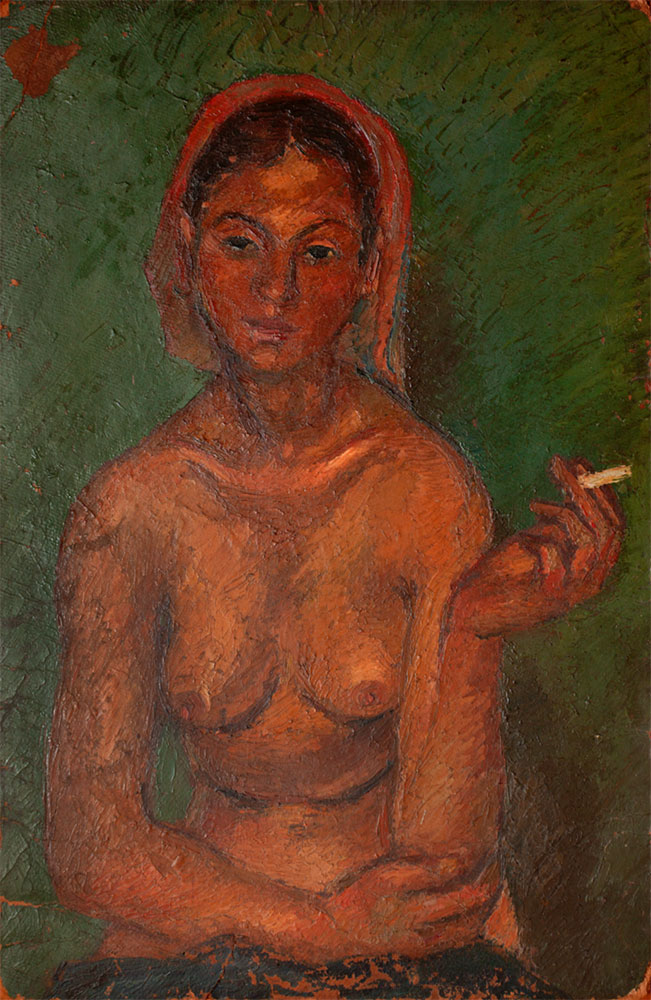
In 1937 she left for Belgrade, as Skopje had no faculty of fine arts at the time. She returned in 1942, in the midst of the war. The same essay reproduces her painting “Roma Woman”, dated 1941—a glimpse of a body of work that deserves further research and careful consideration.
In 1944 she married Džika Sima, whose life we have previously written about on Arno.mk. Their daughter Biljana, my mother, was born in 1950. Nada died in 1959, aged just 39.
When a life is reduced to a few dates, everything that existed between them can easily be lost. That is why I see these details as a starting point for further research. Her works can tell us something that a family biography alone cannot.
The Paintings That Remain
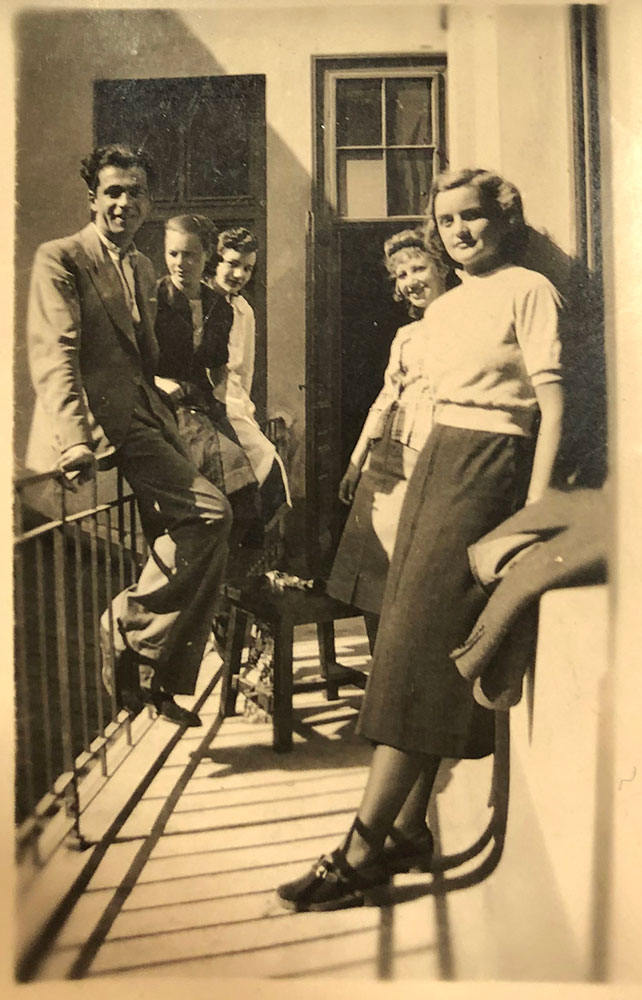
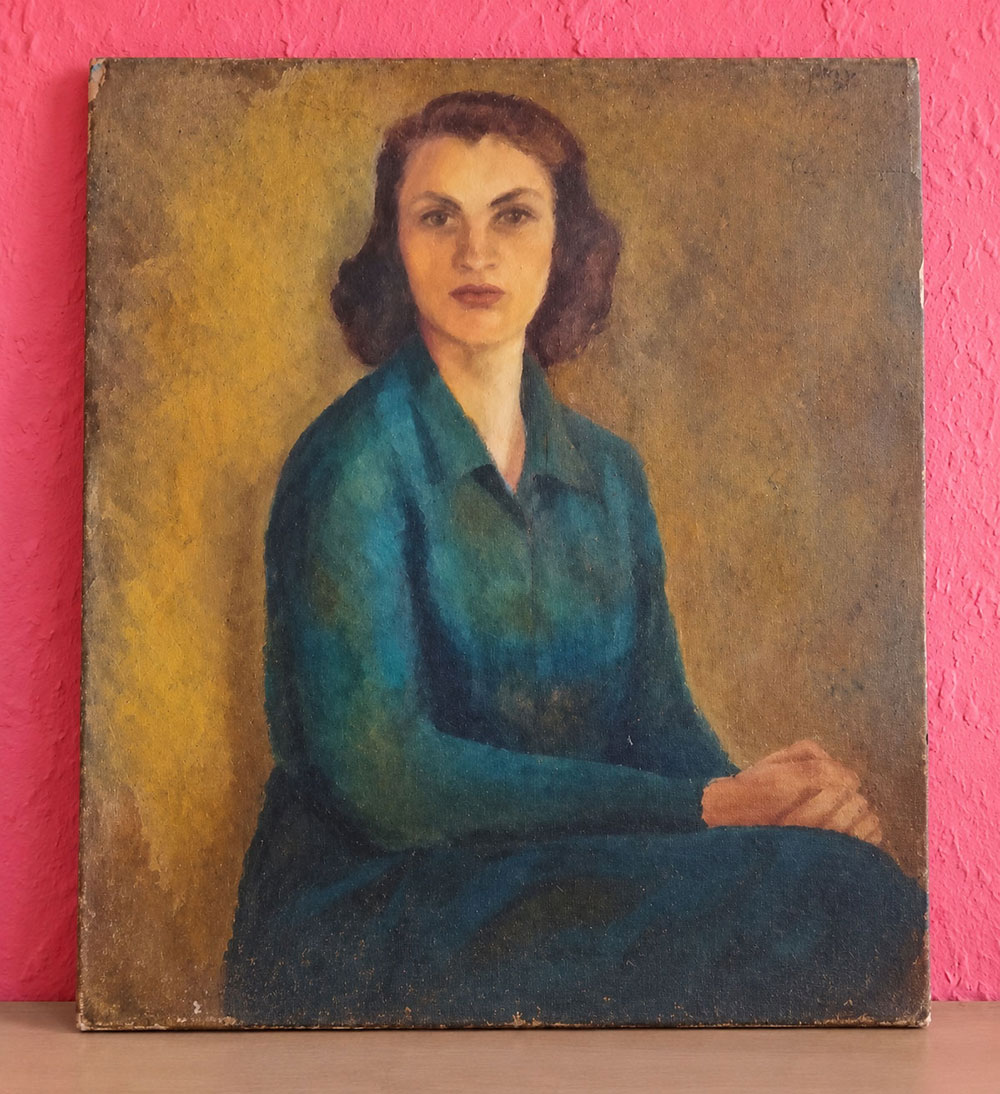
Nada’s drawings have already appeared on Arno.mk in an entirely different context: in an old photograph of me with friends at home, in the article “Debar Maalo Abyss: A Metal Echo of Urban Collapse”. The walls behind us display her work, alongside my sister’s.
Although we never met her, my grandmother’s life had a profound influence on us. My sister and I grew up surrounded by her paintings and the books she had read. Through them, we came to know something of her world, gradually discovering our own. My sister, Nada Prlja, became an internationally recognised visual artist, and I became a writer and cultural practitioner. Looking back today, I recognise her presence in the creative paths we have taken. Her desire to create continued to resonate through our home, many years after her death.
There is something in that photograph that still feels close to me today. As generations, music and conversations change in the room, the drawings remain. They become part of everyday life, sometimes so familiar that we cease to notice them individually. Then an exhibition, a question or an old piece of writing makes us look again.
Research that brings these works into public view gives them another life: a chance to be seen, compared, interpreted and connected with other artists of their time.
What Does “The First” Open Up for Us?
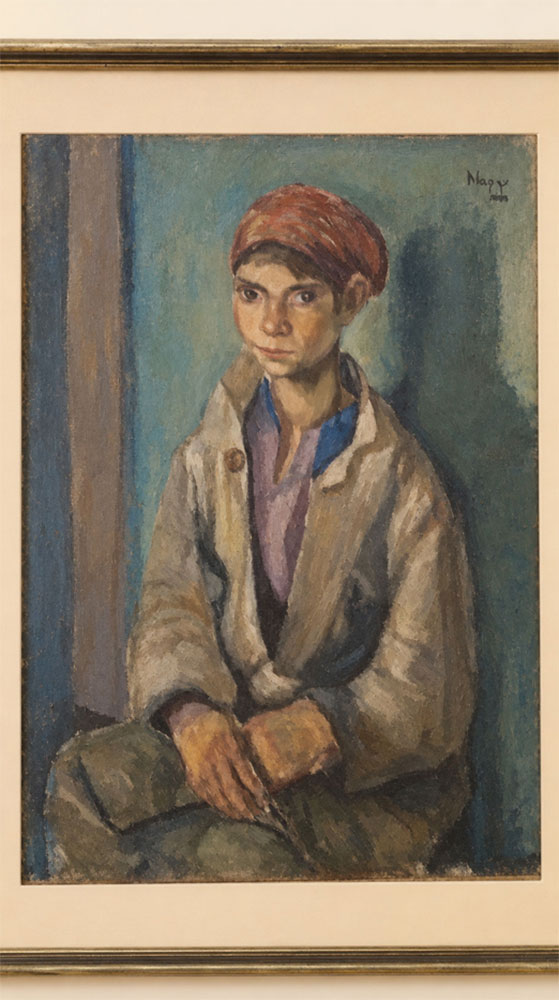
This is where I see the importance of the exhibition. As the curatorial text published by the museum explains, “The First. Women Among Men” re-examines the history of modern and contemporary art through women’s work and the conditions in which they created it. The exhibition connects their artistic contributions with questions of education, equality, institutional recognition and the preservation of their legacy.
Who had access to education? Who was given exhibitions? Whose works were acquired and preserved? Whose lives and work were documented?
These questions have very concrete consequences. To write history, we need artworks, letters, photographs, catalogues and testimonies. When these are scattered across institutions and private homes, bringing them together takes patience, knowledge and cooperation.
The research undertaken by Ivana Vaseva and the museum, the historical contribution of Ivana Hadjievska, and the efforts of everyone involved in the exhibition deserve recognition. Bringing these women artists together in one exhibition allows us to see connections and contributions that are harder to recognise when each story remains separate.
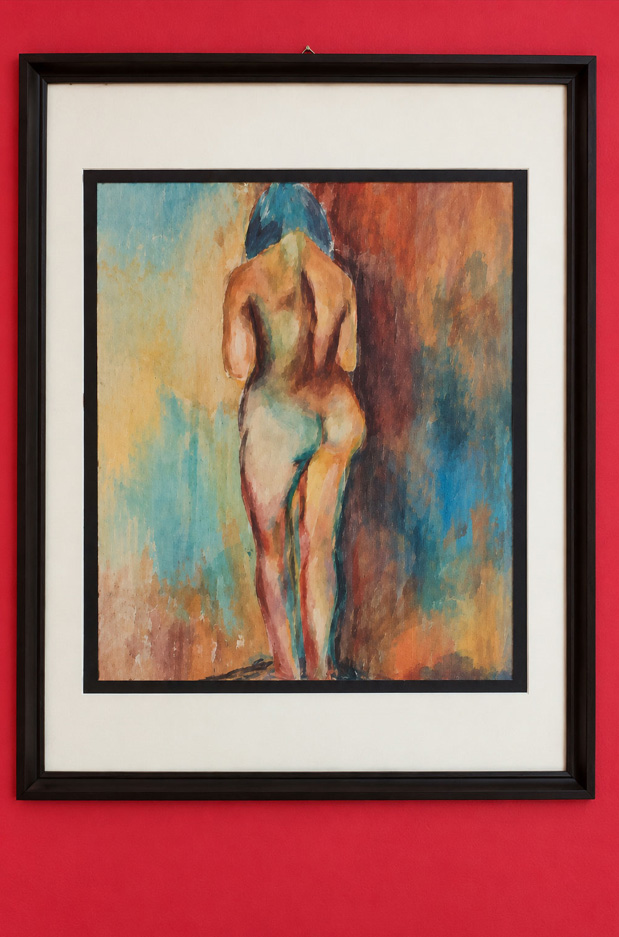
For Nada Korda Sima, I hope this inclusion will inspire fresh interest in her work. My family connection moves me to write about her; research can help us understand her better as an artist.
I will be looking for my grandmother’s name at this exhibition. I hope that someone else, encountering it for the first time, will stop in front of her work and want to learn more.
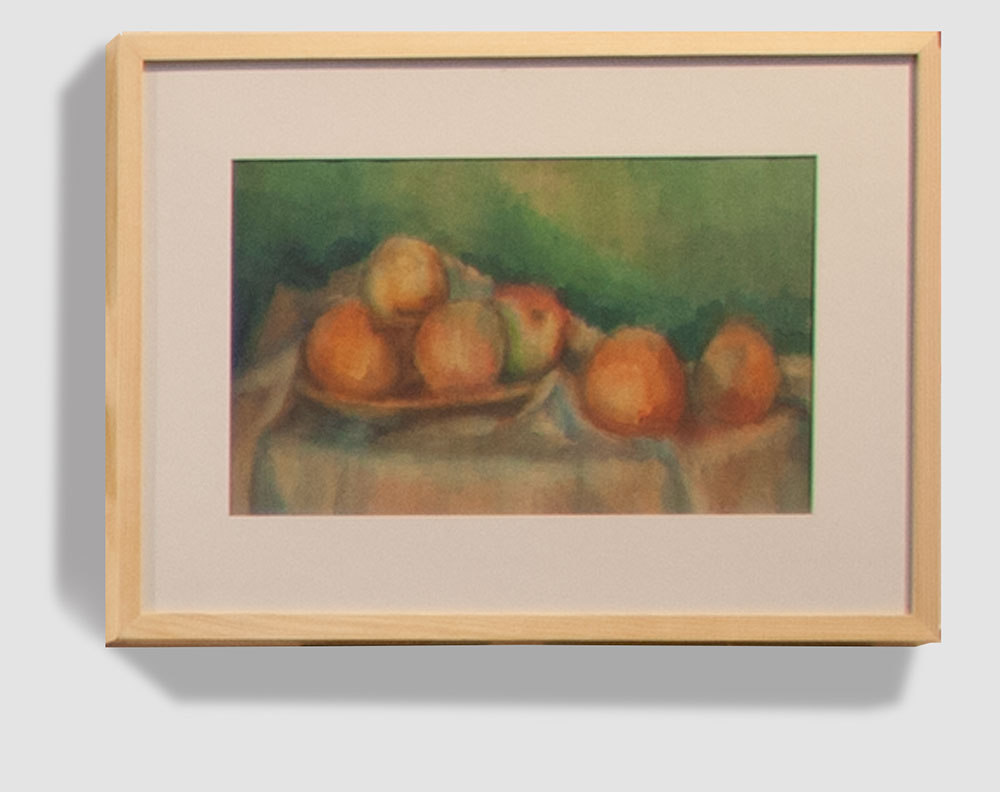
“The First. Women Among Men” opens on 10 November 2026 at 8 p.m. at the Museum of Contemporary Art – Skopje, 17 Samoilova Street. The exhibition runs until 21 March 2027. It is curated by Ivana Vaseva.