Text and photographs: Bert Stein
Green Market in Skopje. Between stalls stacked with “plastic” tomatoes and walls scrawled with messages, I discover a story about our city in constant transition. Here, graffiti is not merely vandalism – it is a mirror of our hopes, frustrations, and daily life. The heart of Skopje, a place where vegetable prices change more often than the political slogans on the walls, and where art sprouts up even where you least expect it.
Green Market, the heart of a city beating to the rhythm of trade and human commotion. My wife, son, and I set out, supposedly, to buy fruit and vegetables, and somehow I found myself in a labyrinth of colors, smells, and – unexpectedly – graffiti. Life is full of these little surprises, isn’t it? Like when you think you are going out for tomatoes and end up searching for art on concrete.
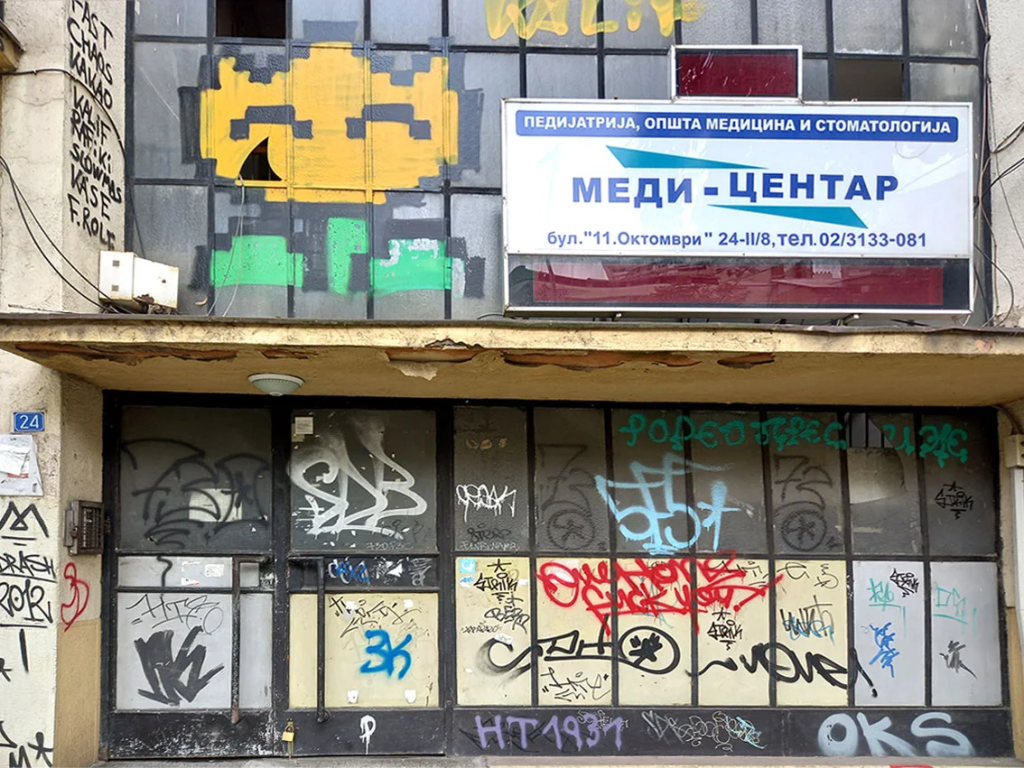
“Go on ahead, I’ll catch up,” I called to them as I pulled out my camera. My son, a typical teenager, merely rolled his eyes. “Those graffiti again!” I could hear the unspoken reproach in his voice. But what can I do when urban art calls to me more strongly than the smell of fresh fruit? At least it is art – and not garbage and dumps – the kind of images that filled my camera’s memory card not so long ago.
I snapped a few quick shots and plunged into the market crowd. The shouting and clamor deafened me, the prices shocked me. When the hell did the tomato in Macedonia become a luxury item? When did our country become Switzerland without anybody bothering to inform me? And not only because of the prices, but also because of the “quality” – an unnaturally shiny, “plastic” tomato, with a core like a corn cob.
(I should write a column about this. “From the Land of the Sun to the Land of Plastic Tomatoes.” Sounds good, doesn’t it? Mental note: publish it on Arno.mk – or better yet, get the contact of an editor at some media outlet that people actually read!)
I moved through the narrow passages between the stalls, avoiding the aunties arguing over prices, their words blending with the cries of the vendors. “Cheapest!” “Tastiest!” “Best!” – like some strange urban choir singing the age-old song of the trading spirit and defiance.
We bought what we needed, the bags overflowing. Despite our efforts to use cloth bags, plastic bags somehow always win at markets. Another battle lost in the war against plastic. What irony – plastic bags for plastic tomatoes! A perfect symbol of our times.
I came back a few days later, this time with a clear mission – to document the graffiti. Around the entrance to the market, the garages stand like sentries from another era. Some have been turned into workshops, others into improvised shops. On their walls, graffiti was battling the tooth of time, the letters peeling away together with the plaster. Transition spared neither them nor anything else – it destroyed, chipped away, stripped, devoured, wore down, screwed up everything around it!
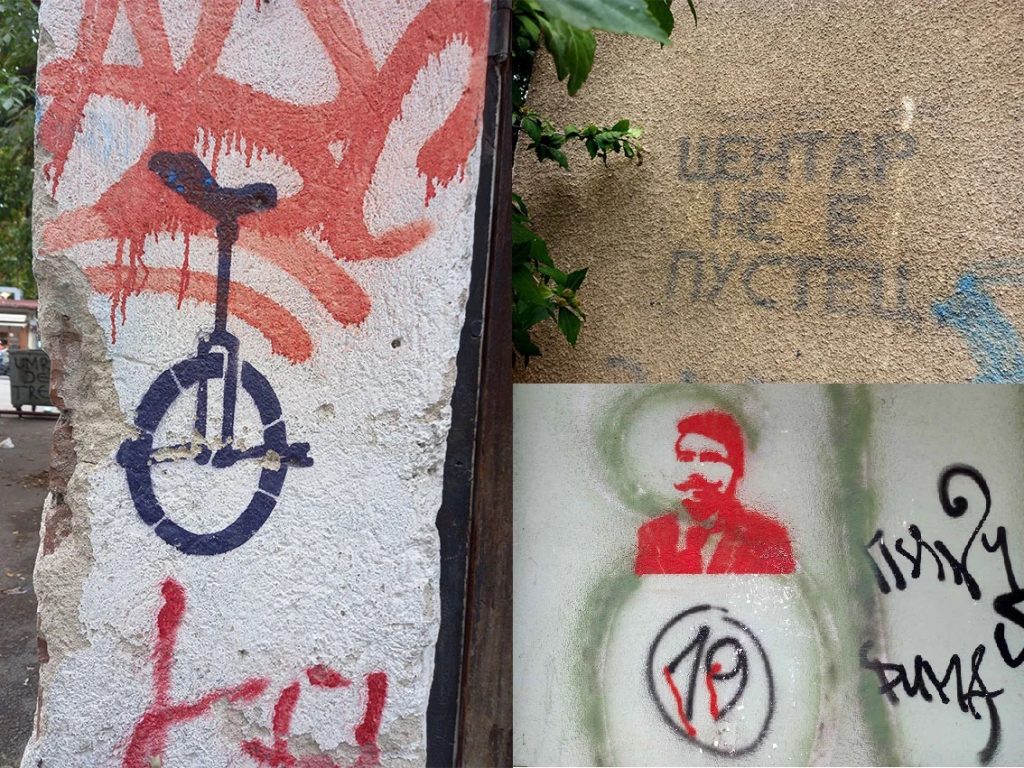
While Fontaines D.C., Silverbacks, Wine Lips, Panic Shack, Idles, Stiff Richards, Teen Mortgage, Death Lens, and other newer bands from a punk-rock compilation on Spotify played through my headphones, a stencil of Goce Delchev greeted me in front of the Green Market entrance, as if reminding me of another time, of ideals we long ago forgot. Next to it: “Centar is not Pustec” – a political message wrapped in urban protest. And a strange pictogram of a unicycle. (Monocycle? And in Macedonian it should literally be “one-wheel,” right? While bicycle would be “two-wheel.” Language is a strange thing.)
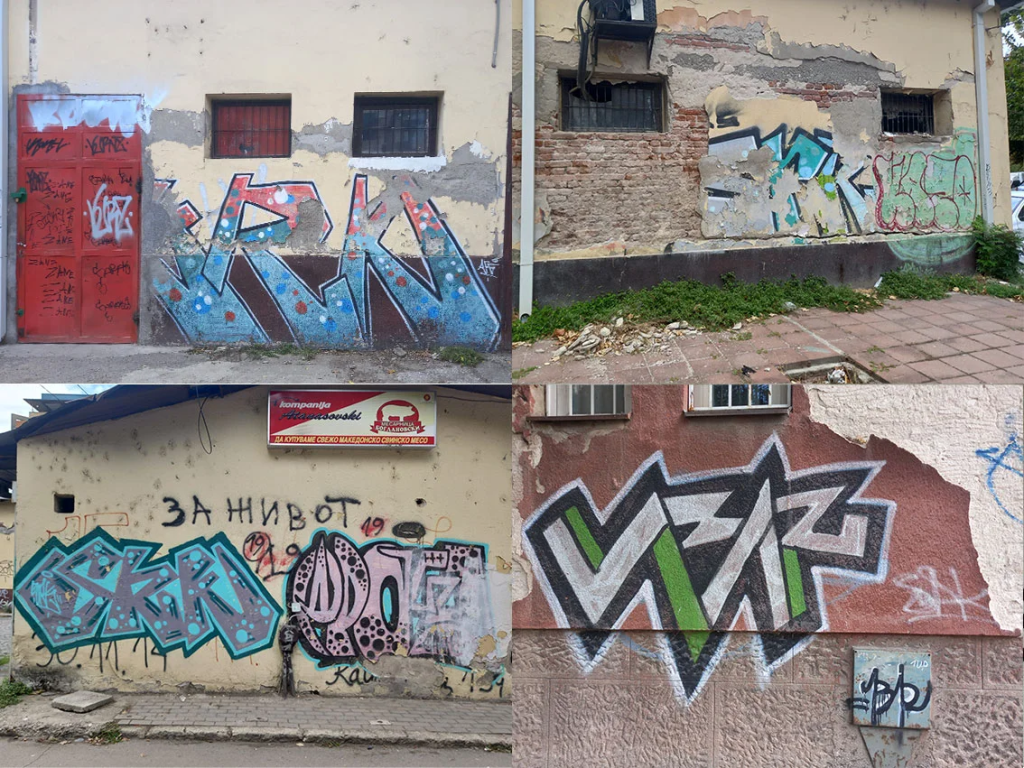
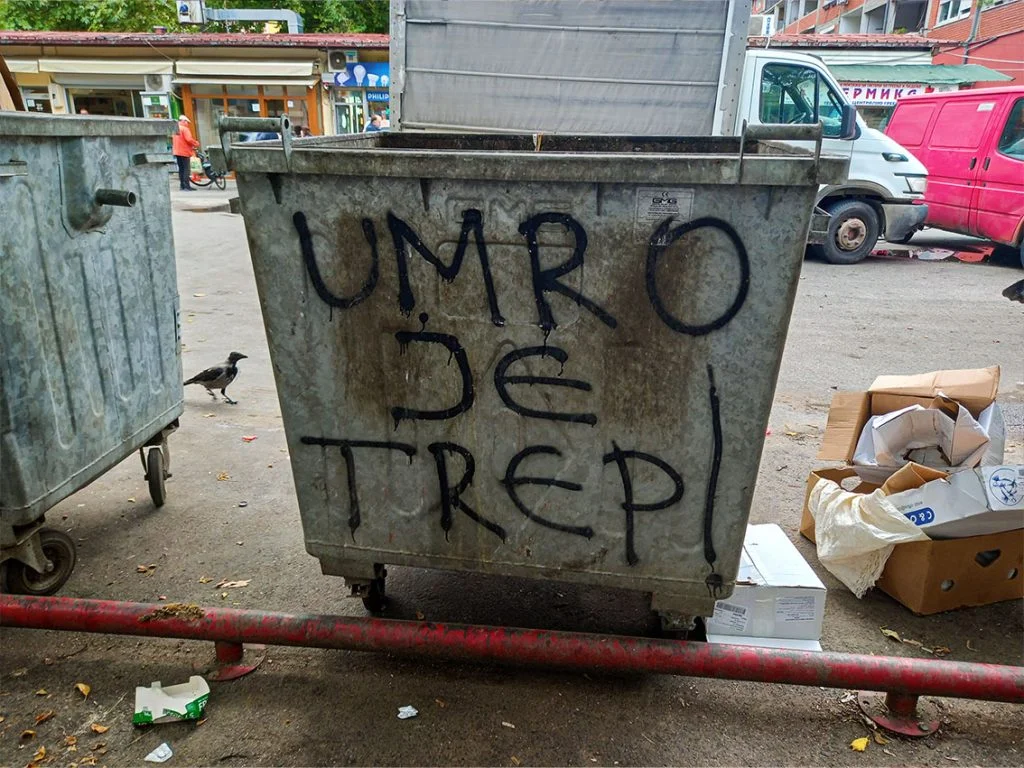
On one container, someone had written in black spray paint: “Trap is dead!” I wonder whether the author realizes that by saying it, he is actually giving it new life. A little farther on, large pieces by Drash and SRK – the well-known Skopje crew. Their works stand there like artifacts!
I frame a shot of a Drash graffiti with a cat sitting on a car beside it. The cat looks at me suspiciously, as if it knows I am photographing it. I smile, remembering that Machka is the nickname of another well-known graffiti writer and a frequent collaborator of Drash. Coincidence? In the world of graffiti, nothing is accidental.
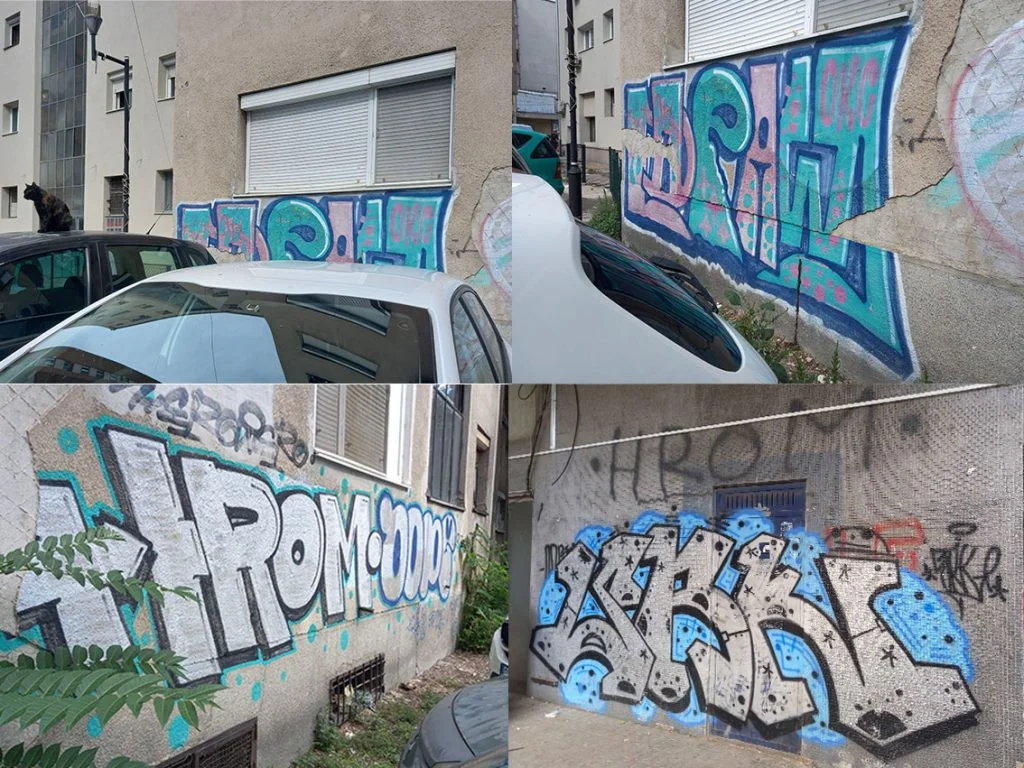
There is also the unavoidable Hrom, whose silver tag serves as a reminder of the neighborhood he comes from. His name is synonymous with the first graffiti supply shop in Skopje – yet another part of the history of Skopje’s street art.
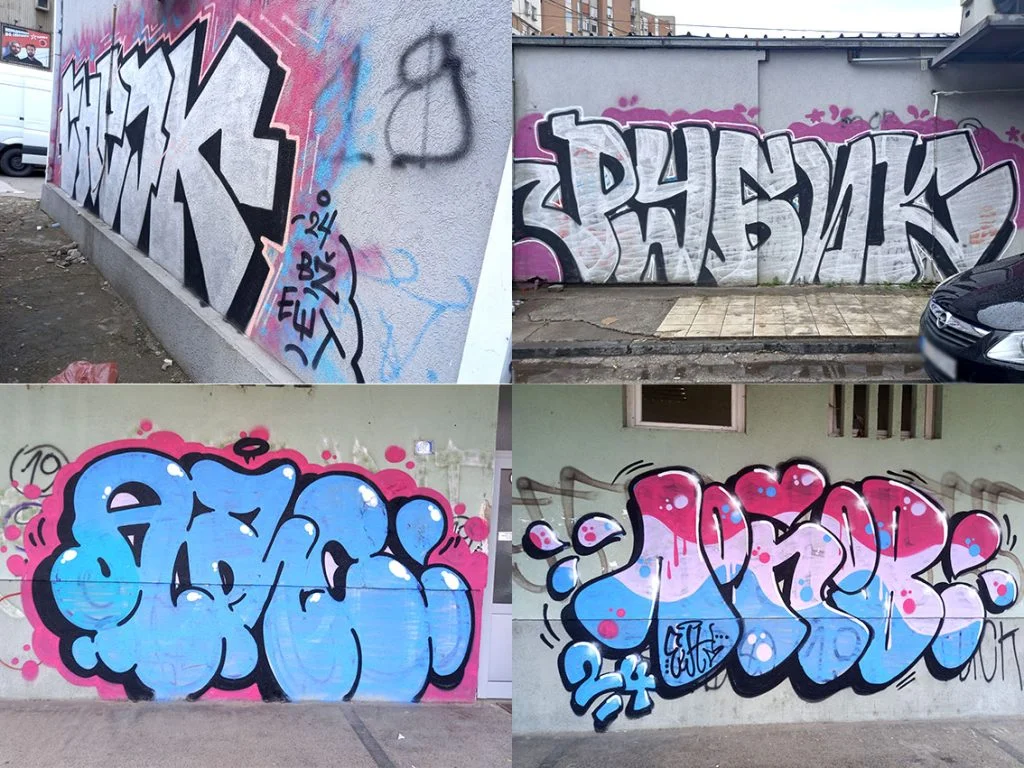
The new generation is here too – Aris and Lopov, Rubik and Snake. I barely manage to photograph Snake behind a parked truck. (I come back another day – the truck is still there. Is someone deliberately parking it there to hide the graffiti? Another graffiti mystery that must be solved!)
One of those graffiti that is almost completely peeled away reads “Fight The War,” and underneath it, “I Agree,” signed by Tom Morello. Beside it, a drawing of the guitarist from Rage Against the Machine. I wonder how many passersby recognize him, how many understand the message. Fight the war – how ironic in a world that is constantly at war.
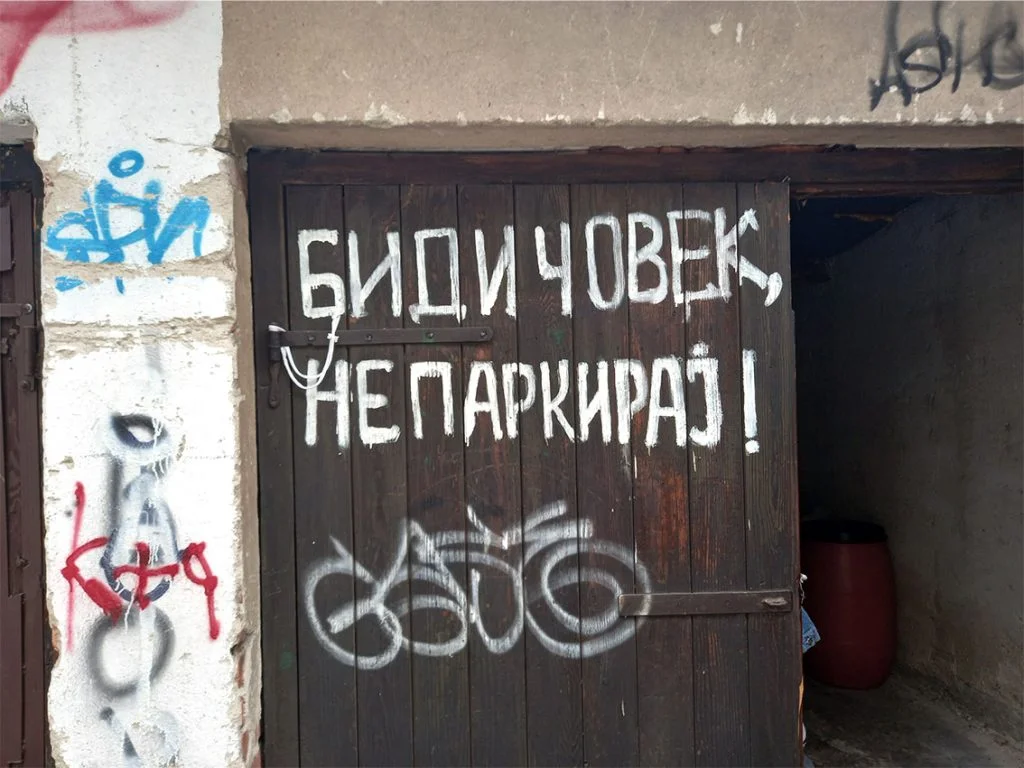
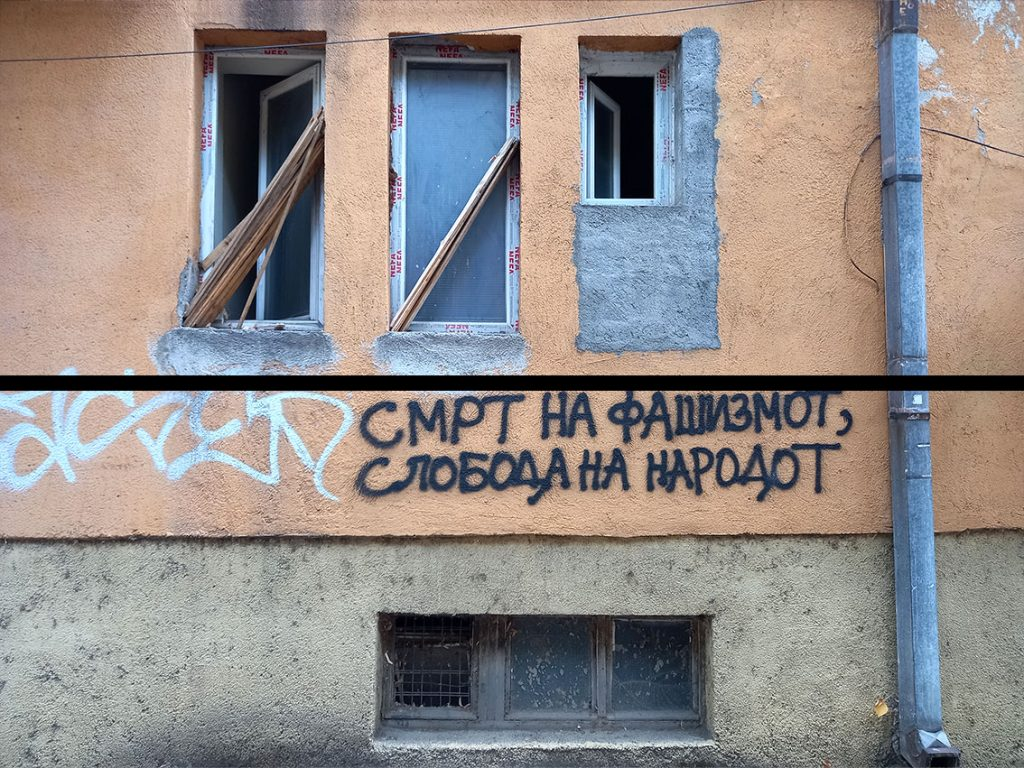
On an old wooden garage, painted in greasy white, someone has written, “Be human, don’t park,” and a little lower down, “Death to fascism, freedom to the people.” They remind me of what graffiti once used to be – a bulletin board for citizens, a reminder of the important things in life and politics. I wonder whether people respect this appeal to humanity.
I hop onto my two-wheeler and come back another day to photograph the graffiti on the side facing 11 Oktomvri Boulevard. This is the real gallery of Skopje – one of the most beautiful in the city. The familiar Skopje drawing faces dominate once again.
One wall is a cacophony of phrases that were supposed to mean something in this country. “Press play for a better future,” “employment,” “youth,” “family,” “Europe”… Words that echo hollow, promises that were never fulfilled. In a country where hope dies last, stubbornness keeps us alive, and cynicism lives forever.
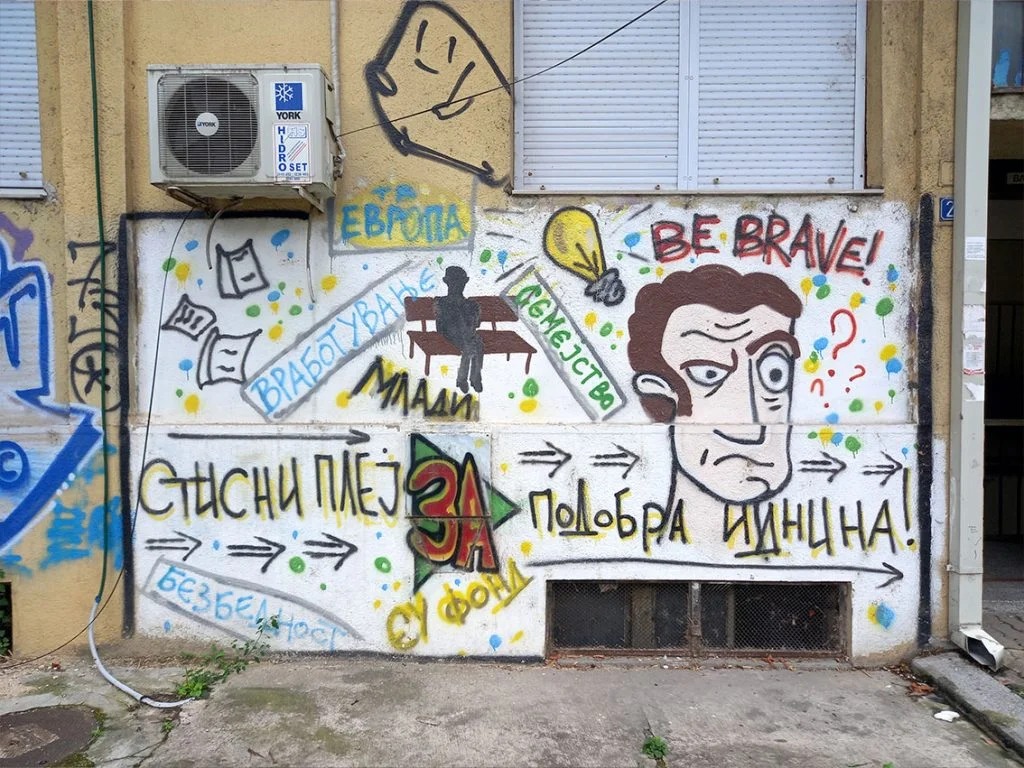
(Maybe I should make an exhibition of photographs of these graffiti. “Promises on Concrete”—sounds good, doesn’t it? Another idea for my list of “one day, when I have time.”)
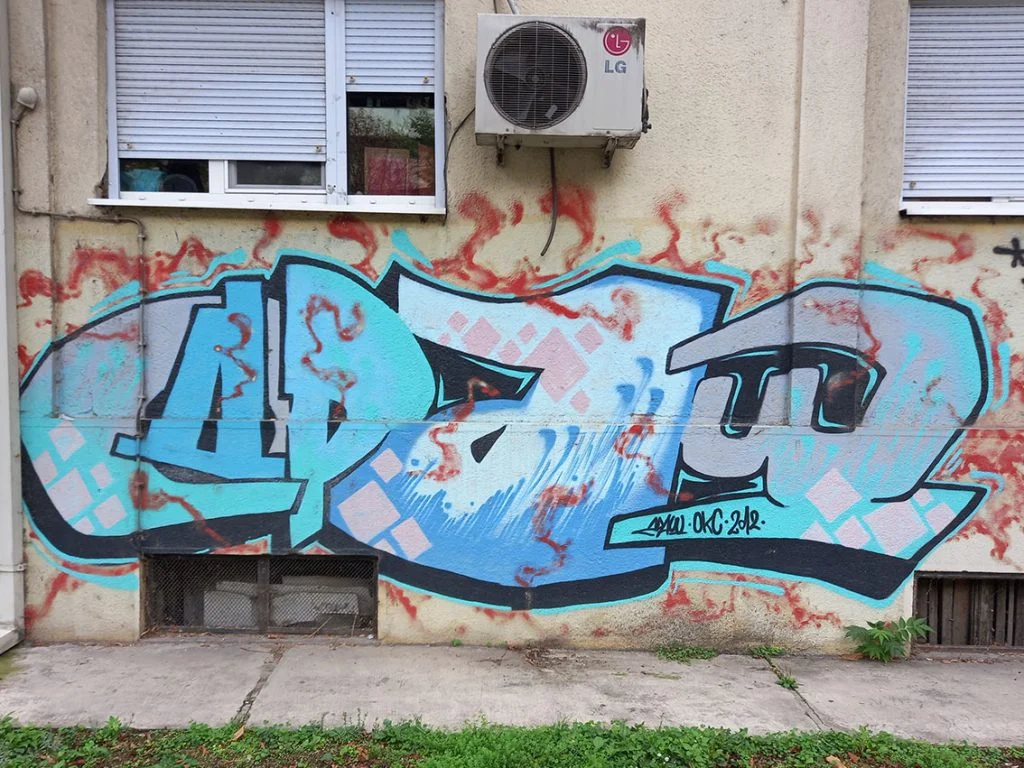
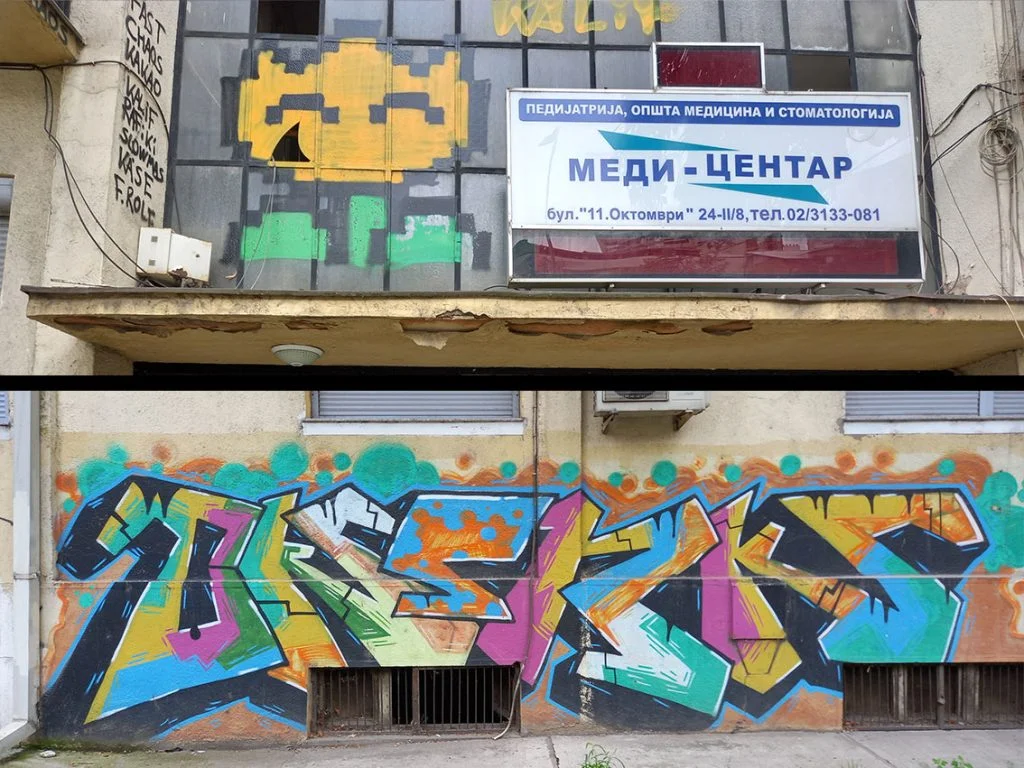
The large pieces by Drash, OKS, and SRK from 2012 stand proudly, witnesses to the time when the graffiti scene in Skopje was going through something like a renaissance. The pixel flower blooms on concrete, a reminder that beauty can grow even in the harshest conditions.
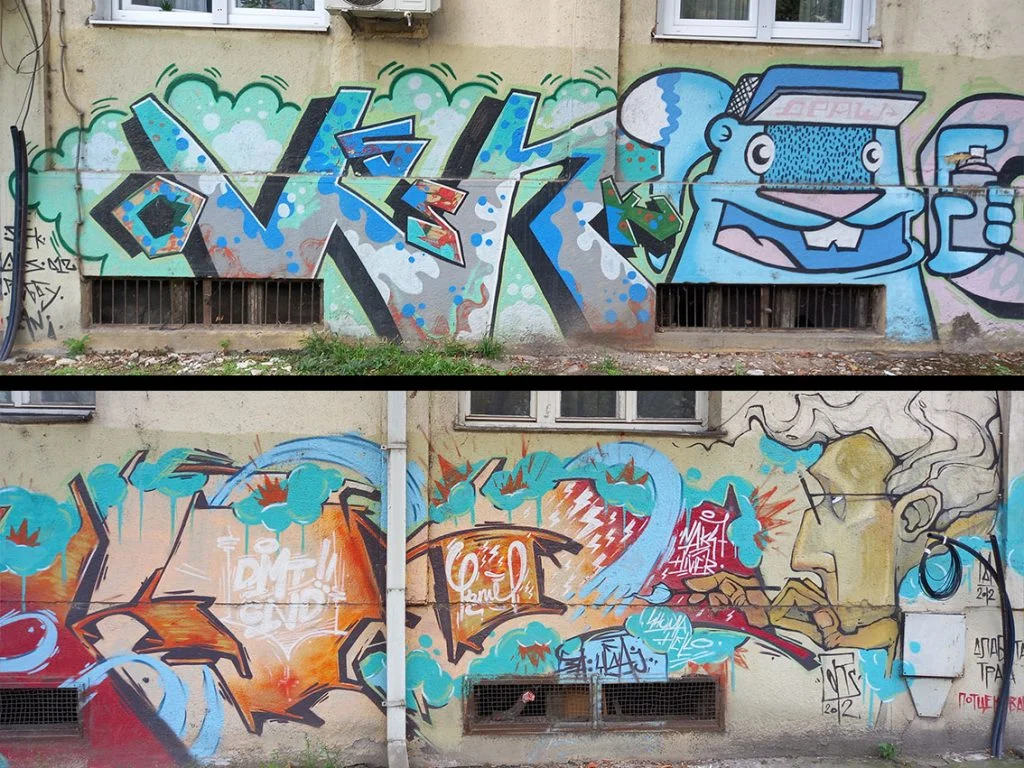
At the corner of Kocho Racin Street is the mural of Racin himself. I remember when Go Tse Tunt, my collaborator from “Graffiti.mk,” photographed it while it was being created. At the time, it struck me as one of the nicer interventions in public space. Now, seeing it again, I notice its political connotation. I wonder what Racin would say about our present – would he be writing graffiti instead of poems?
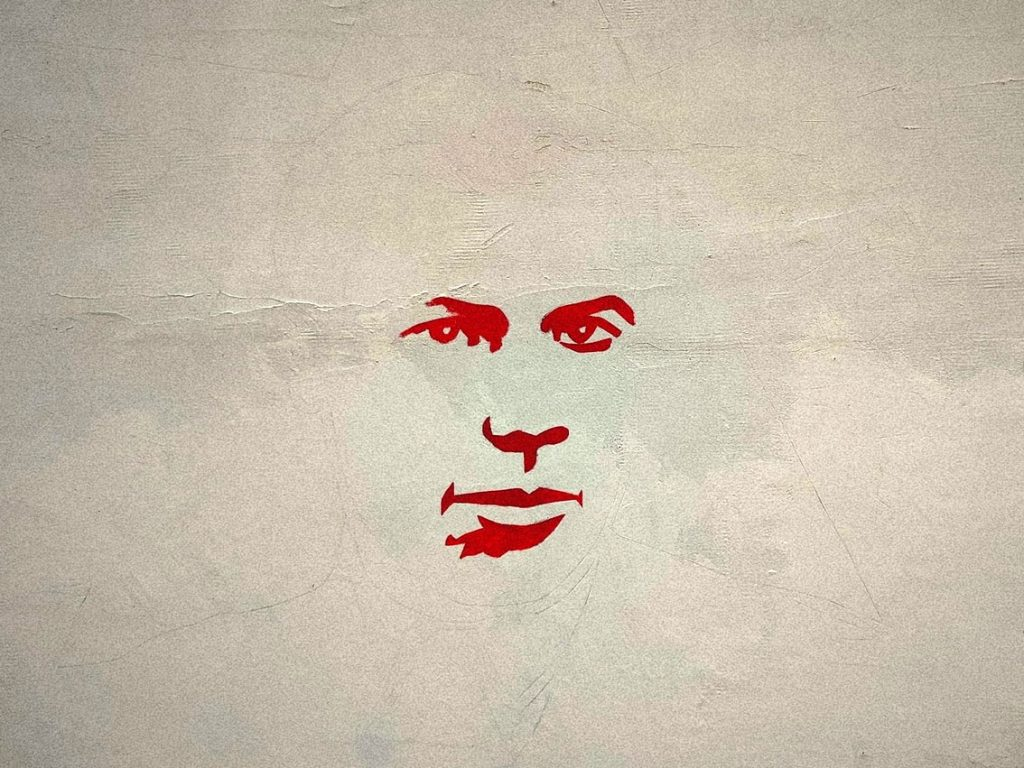
Politics does not interest me, I tell myself as I turn onto Kocho Racin Boulevard itself, where yet another gallery awaits me with names such as Darma, Bavar, Burek, Stoma, Bavar, and once again Snake, Aris, and Rubik.
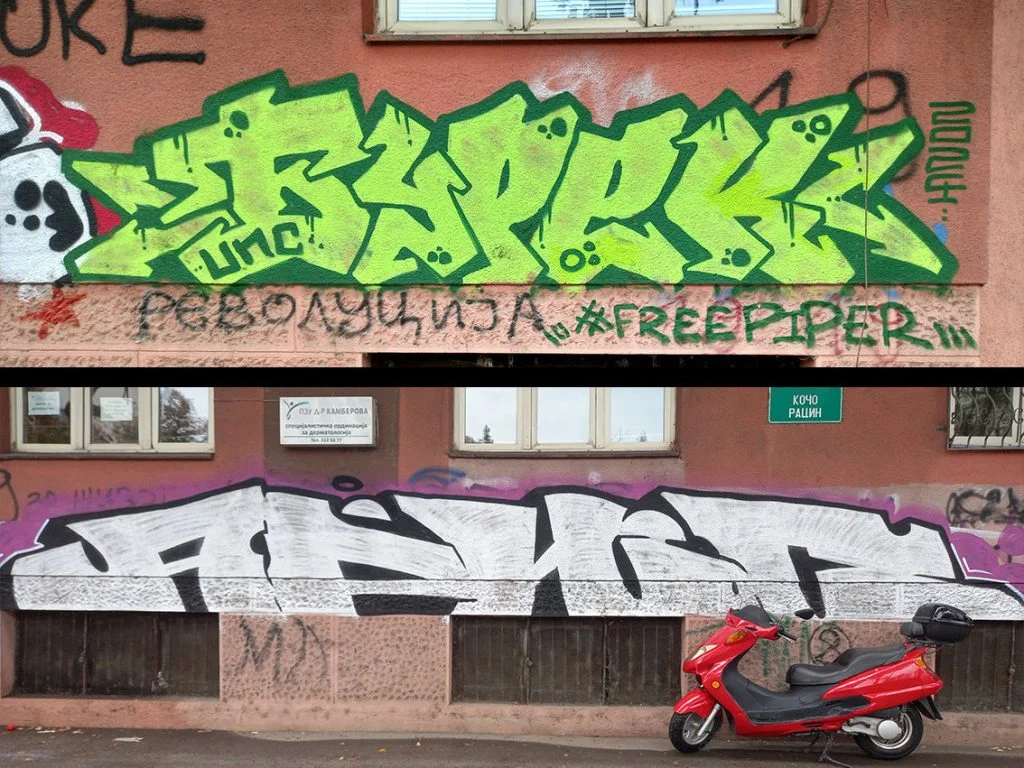
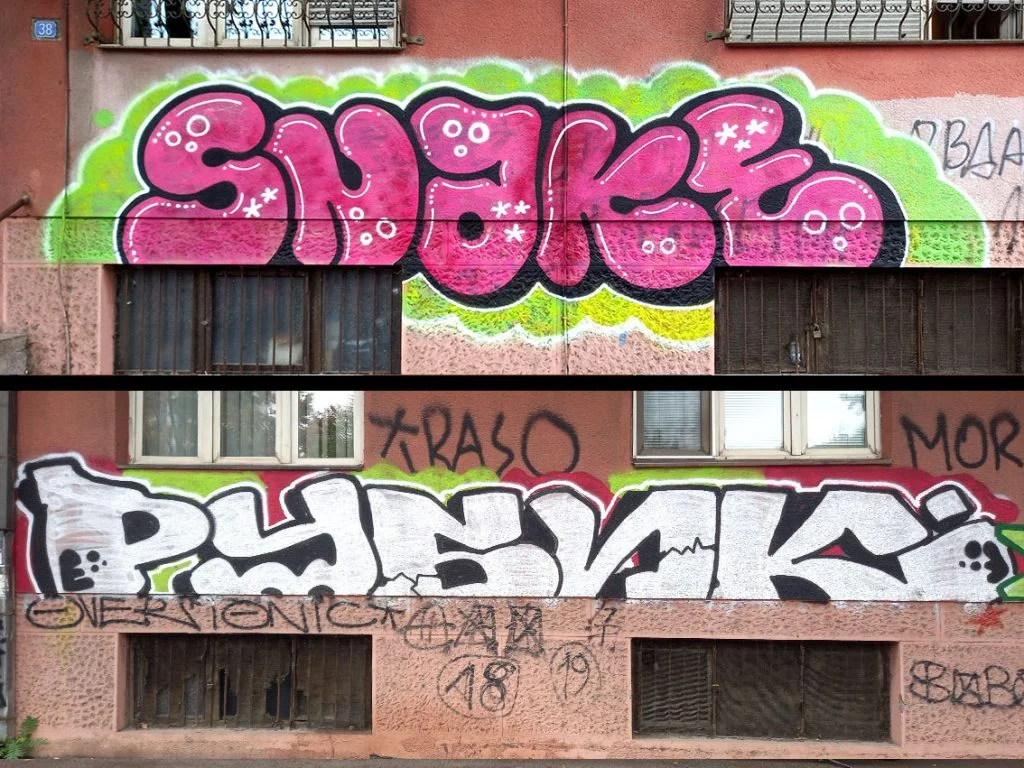
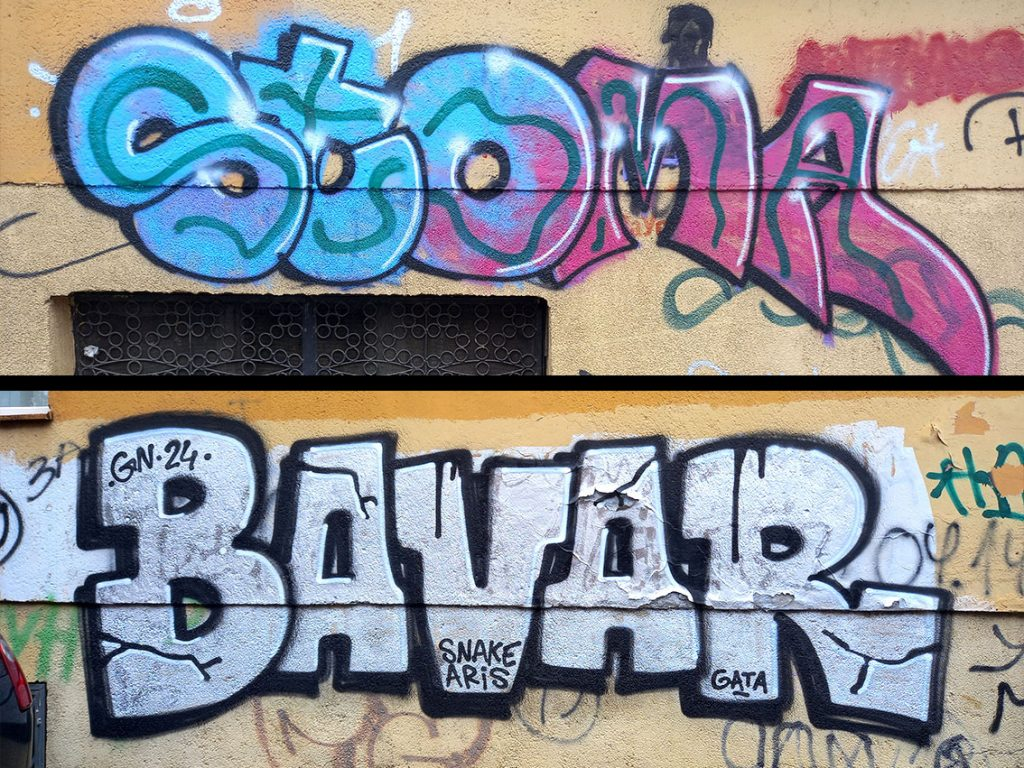
The vivid colors of the graffiti remind me of the market stalls, filled with all kinds of fruits and vegetables that increasingly share the same bland industrial greenhouse taste. I want red, tasty tomatoes, not plastic! I remember the first text I wrote for Arno.mk five years ago, titled “Plastic Clothing.”
Isn’t that the greatest irony? While documenting these graffiti, these expressions of rebellion and creativity, I realize that all of us have become part of the same system we rebel against. Plastic tomatoes, plastic clothing, plastic lives.
I put the camera back into my backpack, and in my head echoes the question a graffiti writer asked me the other day: “Why are you doing this?” I look back at Green Market, pulsing with life like a vast urban heart. The graffiti on the surrounding walls continue to whisper their stories, waiting for someone to read them, to understand them.
“That’s why!” I answer the curious writer in my mind. Because these images, these moments of rebellion and creativity that I document, may one day be the only testimony that we existed. As I ride home, I realize I am documenting not only the past and the present, but also making a time capsule for one possible future—a future in which these graffiti will be painted over, the writers will leave for foreign lands in search of a happier life, or these buildings will be replaced by new ones (bigger and uglier), and then someone may see these images and say: “Yes, there they are—they created and lived here!”
You can see the rest of the graffiti from this location here.
Check the original text in Macedonian.