Text and photographs: Bert Stein
Madzhari, a neighborhood trapped in time, called to me with its silence. I set out in search of graffiti, of colors that are not there, of stories unwritten on concrete canvases. Riding my bicycle down a familiar road, memories surged up like the murky Vardar River – the 1990s, filled with the sounds of Iron Maiden, Moonspell, Anathema. “Listen, listen…” – the voice of my high school friend echoes through the corridors of time, interrupting our conversation so we can catch a bass line or a voice, some riff that will carry us off into other worlds.
I set off from Novo Lisiche (idiot) and crossed the “Twin” Bridge, the only artery linking this part of the city to the highway, standing like the guardian of the gate to Madzhari. Two wholes, two time periods – the 1970s and the 2000s – joined into one, like a metaphor for a city constantly trying to bridge its contrasts. Thousands of vehicles pass here every day, carrying people and stories, hopes and disappointments. And I, on my bike, am like Don Quixote on his Rocinante, setting out in search of windmills that do not exist. But I do not know that yet!
(Did I really expect to find graffiti in Madzhari? Or was I only looking for an excuse to return to the past? Maybe I should ask my high school friend, see whether he has noticed any changes over the years. I’ll call him today, if I don’t forget.)
Riding along Serbia Boulevard and then Kiro Gligorov Boulevard, I breathe deeply of the polluted air. The traffic congestion reminds me of the need for yet another bridge (several more!), perhaps the one by Hotel Russia that stands like a monument to unrealized plans. I imagine what Skopje would look like with roundabouts before and after the “Twin” Bridge, with less gridlock and more room to breathe. But these are only the fantasies of a tired cyclist or an idealist… (or not)?
Instead of taking the main road toward Madzhari, which is an impossible mission for a cyclist, I turn toward the wholesale market. I pass by Kanal 5 television and head for the railway tracks. An illegal crossing. Of the many tracks, only one is functional; the others are like forgotten lines from some industrial poem – overgrown with weeds, shrubs, and trash. This is the road I used to ride every day by bike, it feels like a thousand years ago, though it was only before the pandemic – when I worked at a printing house there.
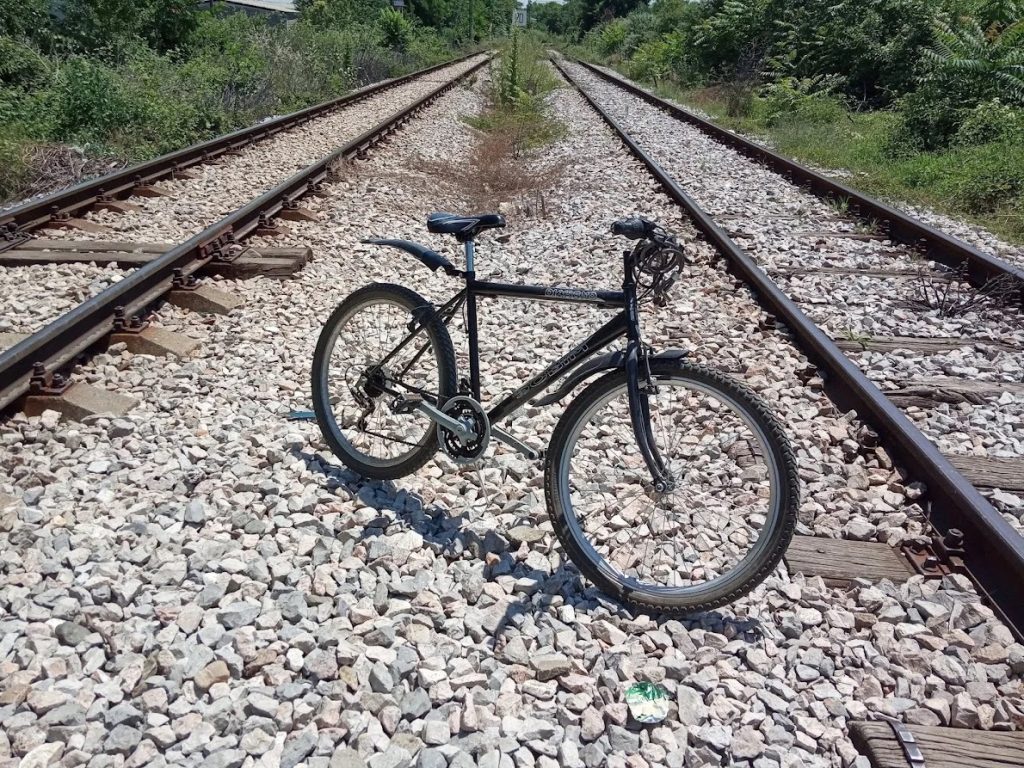
Each turn of the pedals carries me through time – from the present into the past and back again, like some strange two-wheeled time machine. Today almost nothing has changed – for the better, that is. Now there are only more overgrown sidewalks, fallen utility wires on top of them, and a few mini-dumps by the roadside. The same potholes, the same grayness.
At last I reach Blagoja Stefkovski Boulevard and enter the heart of Madzhari. But first I head toward the Mihajlo Pupin secondary school. Somewhere here, right at the beginning of the boulevard, next to the highway, stood the “Kumanovo” factory and automatic flour mill, built in 1938 by my great-grandfather (Karel Korda) and his partners from Czechoslovakia, in what was once an industrial zone.
Now it stands there, crumbling under the tooth of time, like a forgotten scene from a Tarkovsky film (Nostalghia, Mirror, Stalker… choose for yourself). I have nothing to do with that place, yet for years I have dreamed of what it might look like reborn, filled with artists, their murals covering the cracked walls, the sounds of experimental music echoing through the corridors. Like those buildings in Bologna I saw as a student in the 1990s!
But reality pulls me back into the present. Instead of vivid graffiti, in Madzhari I am greeted by gray facades and children’s scribbles. A few nationalist messages remain like ugly scars on the walls, reminders of wounds that refuse to heal. Here and there, lyrics from turbo-folk songs – the contemporary poetry of a generation lost between the past and the future.
(Were we that lost in the ’90s too? Or did we simply have better music to mask our confusion? Hm, maybe this is a good topic for a discussion with my friend. Note to self: organize a get-together soon!)
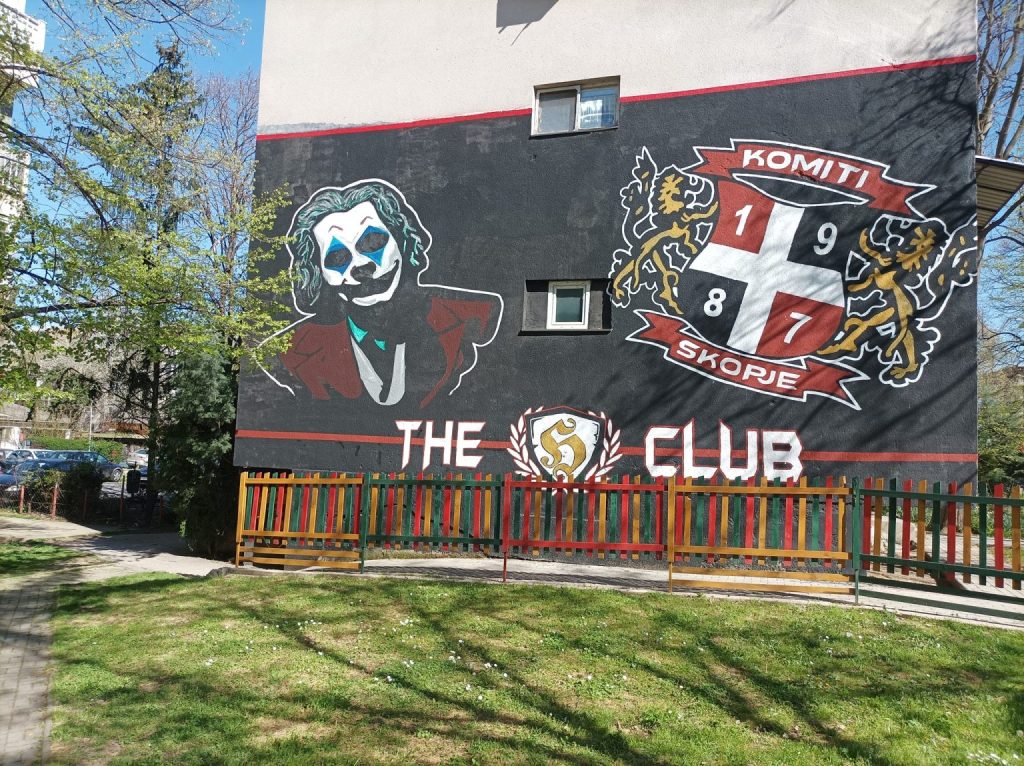
I go deeper into the neighborhood, hoping to discover some hidden treasure of urban art. Instead, I am met by a huge Komiti mural with the Joker – Joaquin Phoenix’s face staring down at me with its sinister smile. I think to myself, ironically, that the only real “graffiti” here is a figure laughing at the absurdity of the world. Is Madzhari laughing at its own absurdity too – a neighborhood trapped between past and present, unable to write its stories on its walls?
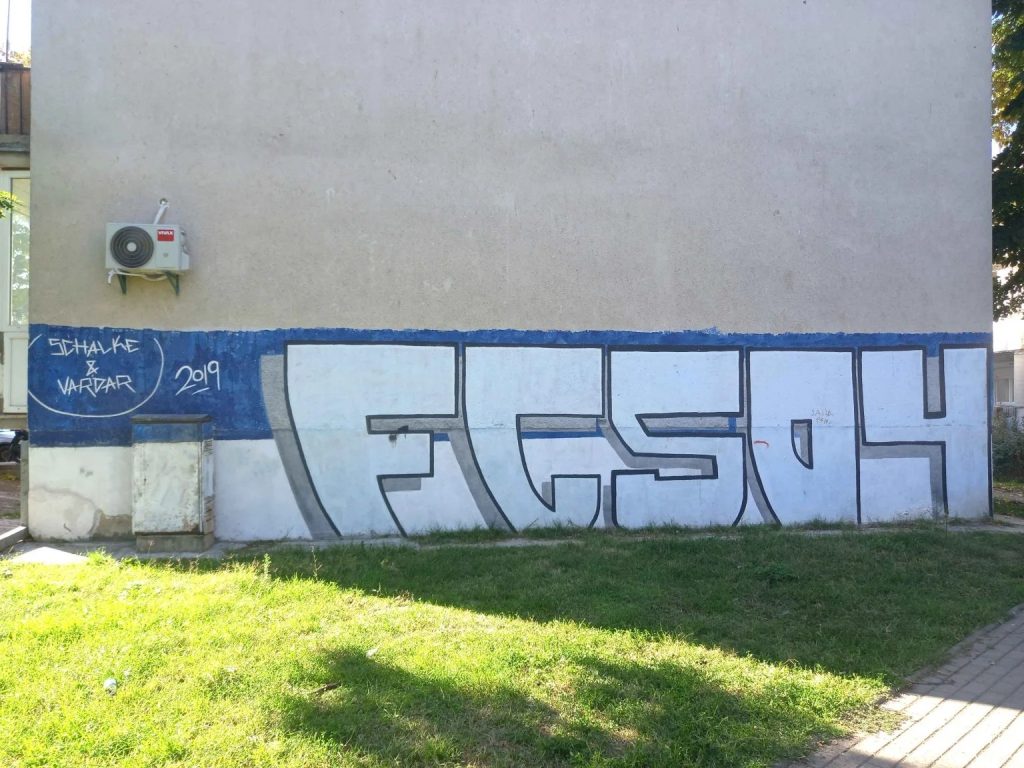
I continue on and come across a few more graffiti dedicated to the football club Vardar. The supporter groups, it seems, are the only ones leaving a lasting mark in this neighborhood. But even these works seem pale compared with the vivid murals I had imagined. I realize that an urban Madzhari may never have existed, even though through my friend I knew many alternative kids, metalheads, and musicians from this neighborhood.
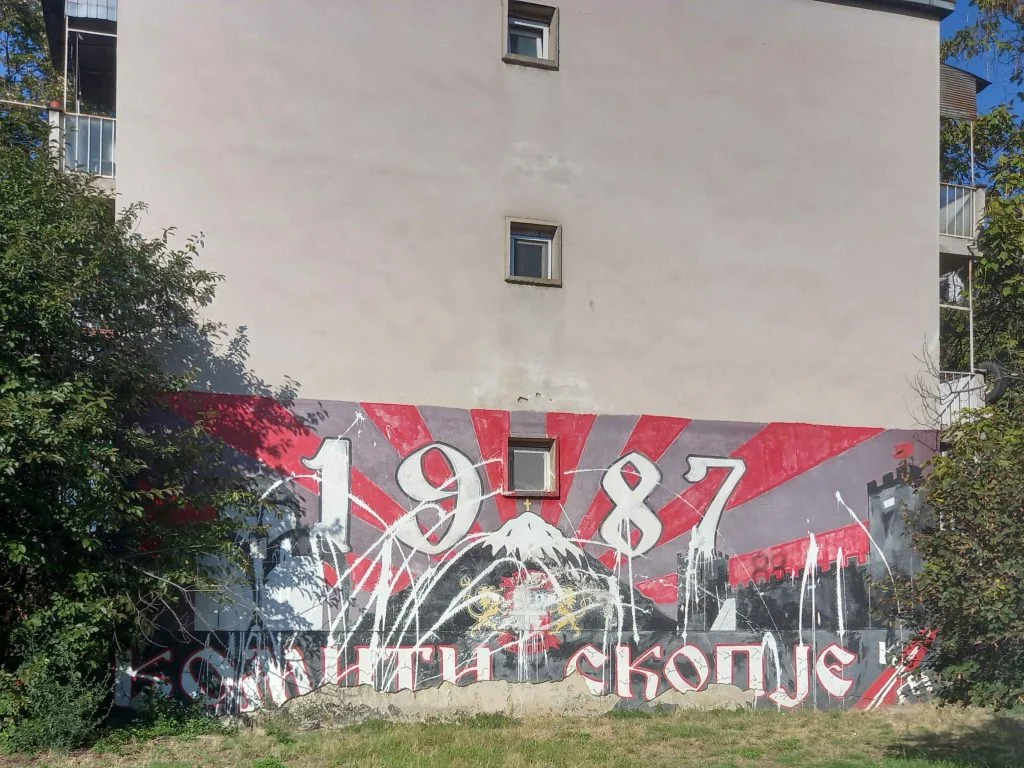
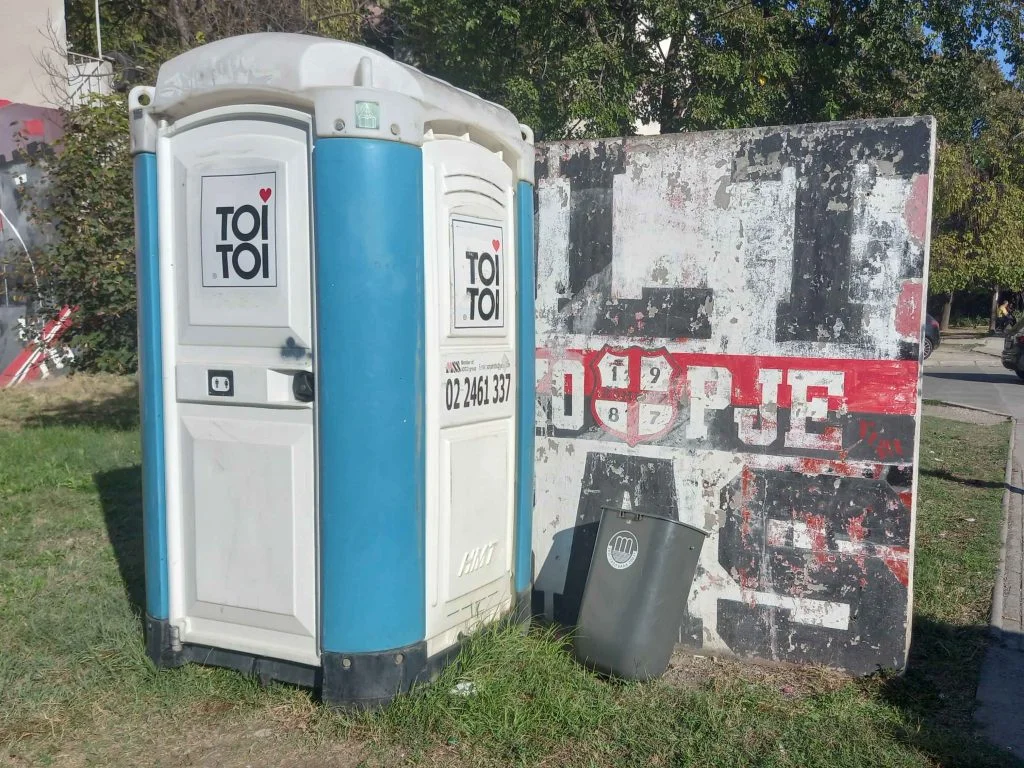
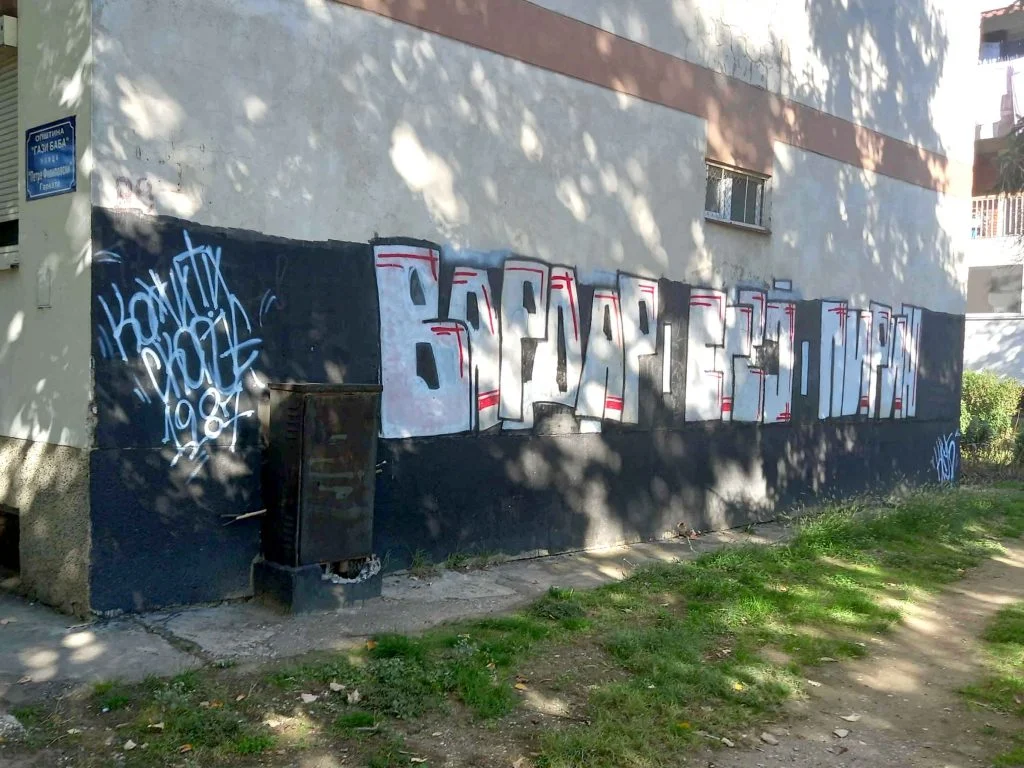
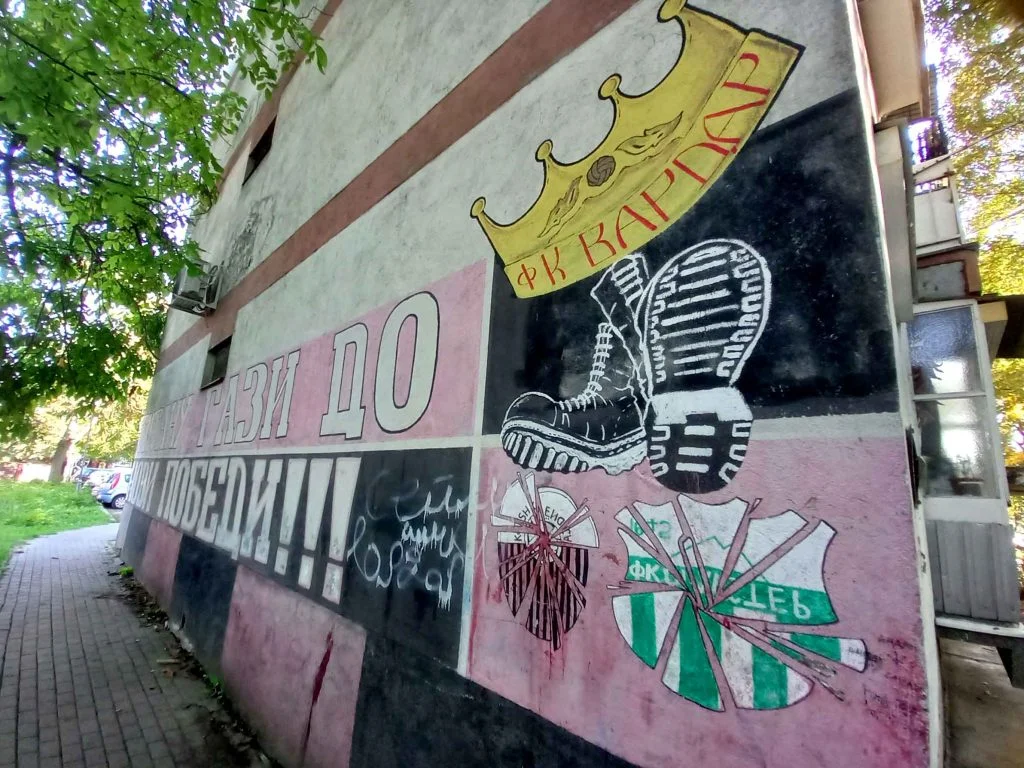
Disappointed, I head back. I cross once again (illegally) over the neglected tracks and quickly reach Kiro Gligorov Boulevard, which greets me once more with its cacophony of sounds and smells. The exhaust fumes remind me of our daily poisonings – literal and metaphorical. The city breathes heavily, like a sick old man forgotten by his children.
(Maybe I should write a letter to the city? Yes, as if that would change anything. Still, maybe it would be worth trying. I’ll add it to the list of things I “should do one day.”)
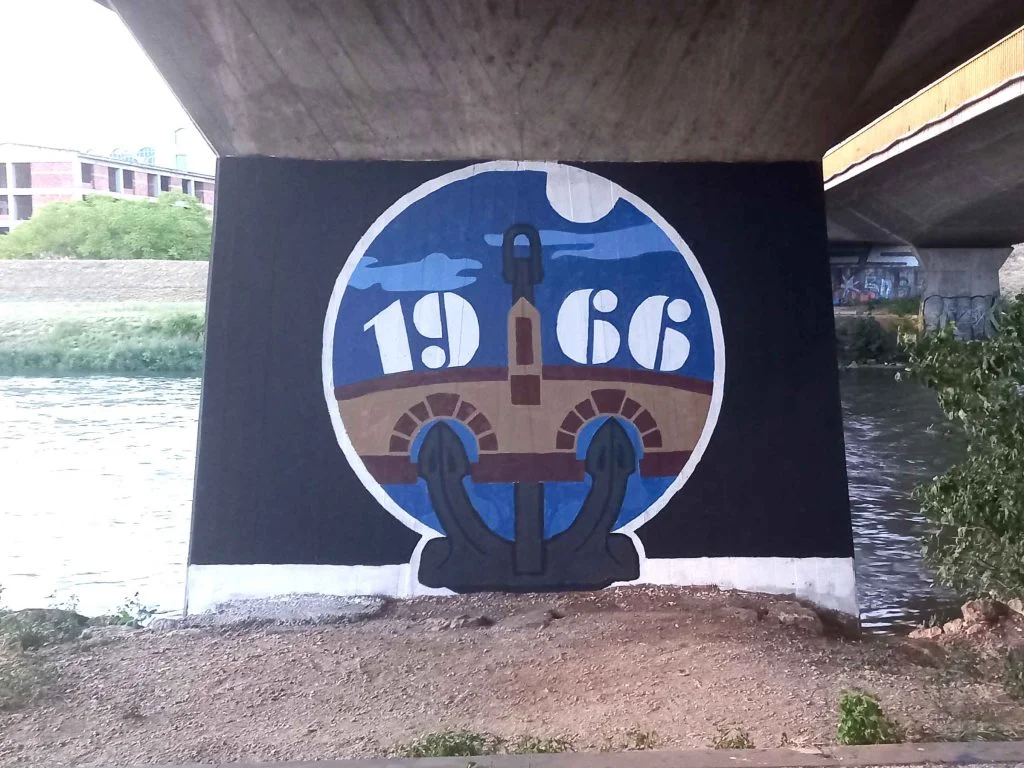
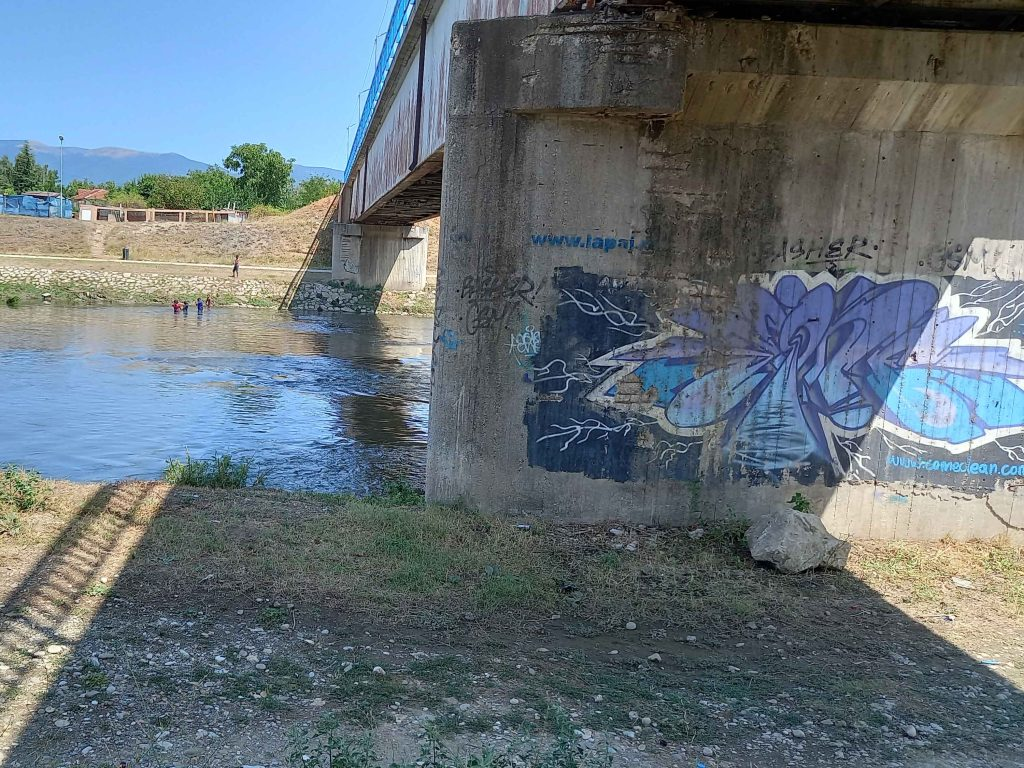
I decide to drop down to the riverside embankment, to escape the grayness and the pollution. I come across a graffiti dedicated to the “Twin” Bridge. The year written on it remains a mystery – the bridge did not even exist then. I stand there, staring at the numbers, feeling like an archaeologist trying to decipher some ancient inscription.
I continue on toward Aerodrom and Centar, where at last familiar names greet me – Hrom, Drash, EBSF, and others. Their works stand proudly on the walls, as if mocking me for my unsuccessful journey through Madzhari. “Here we are,” they seem to tell me, “we’re here – where were you?”
I look back across the Vardar River and think about this neglected part of Skopje, the Roma neighborhood accused of burning cables, Vardariste with its semi-legal dump that releases poisonous smoke even in summer. All these problems spill over into Madzhari too, a neighborhood that seems forgotten by time and by the authorities.
My head is full of thoughts and questions. Madzhari remained mute, refusing to reveal its secrets to me. Maybe that is its story – the silence that speaks louder than any graffiti. A neighborhood trapped in the in-between, neither here nor there, like those abandoned tracks leading nowhere.
I think about the nature of urban expression. Maybe the absence of graffiti is just another kind of expression, a quiet protest against a world that constantly demands that we leave a mark.
(I’ll share this experience in the Graffit.mk group. Maybe someone else has a different view of Madzhari, knows of other graffiti I missed. Or maybe I’ll inspire some young artist to color these gray walls. Who knows?)
Maybe my journey was not in vain. Madzhari told me its story – even if it is a story about forgetting. And me? I remain here, stuck between nostalgia for the past and hope for the future, camera in hand and unwritten stories in my head, ready for the next urban journey, for the next search for colors and stories hidden in the corners of this complex city.
Check the original text in Macedonian.