This article is part of a series linked to the interactive map “Alternative Skopje in the 1990s”. Place by place, we revisit the clubs, cafés, concert venues and informal gathering spots that shaped the city’s alternative scene. We connect personal memories with photographs, documents and archival sources—and invite readers to help us fill in the gaps. Open the Music Garden archive entry on the map.
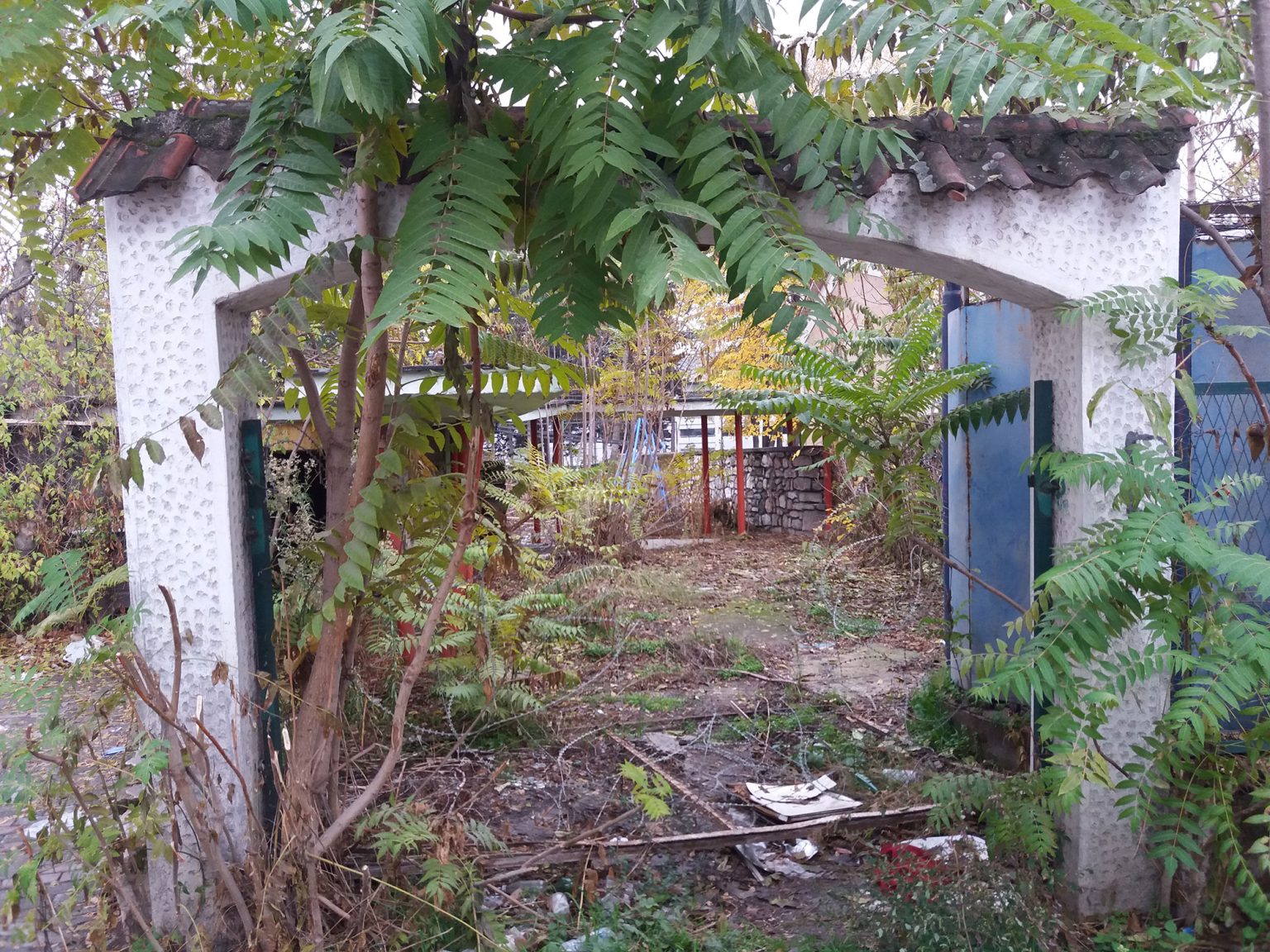
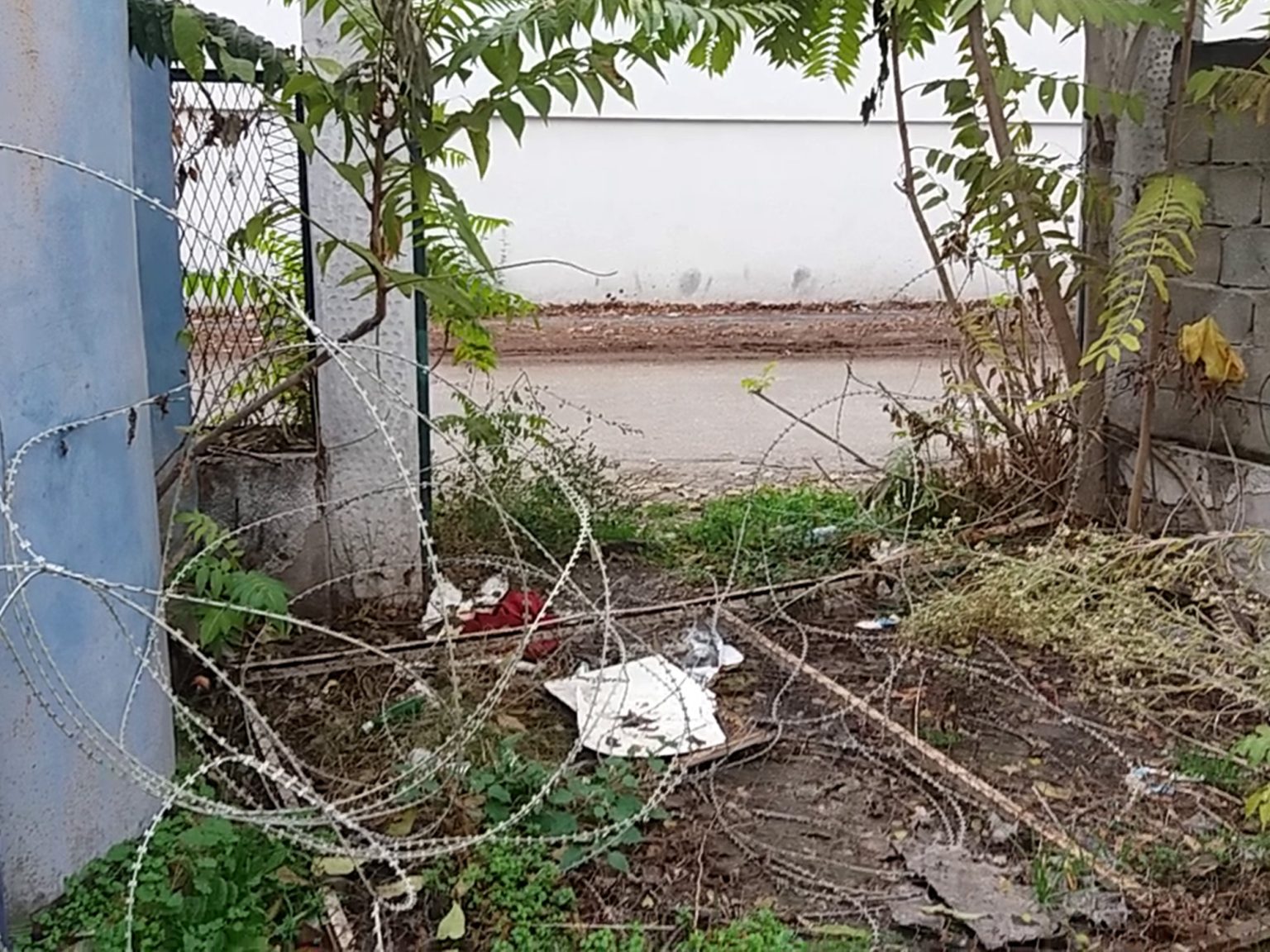
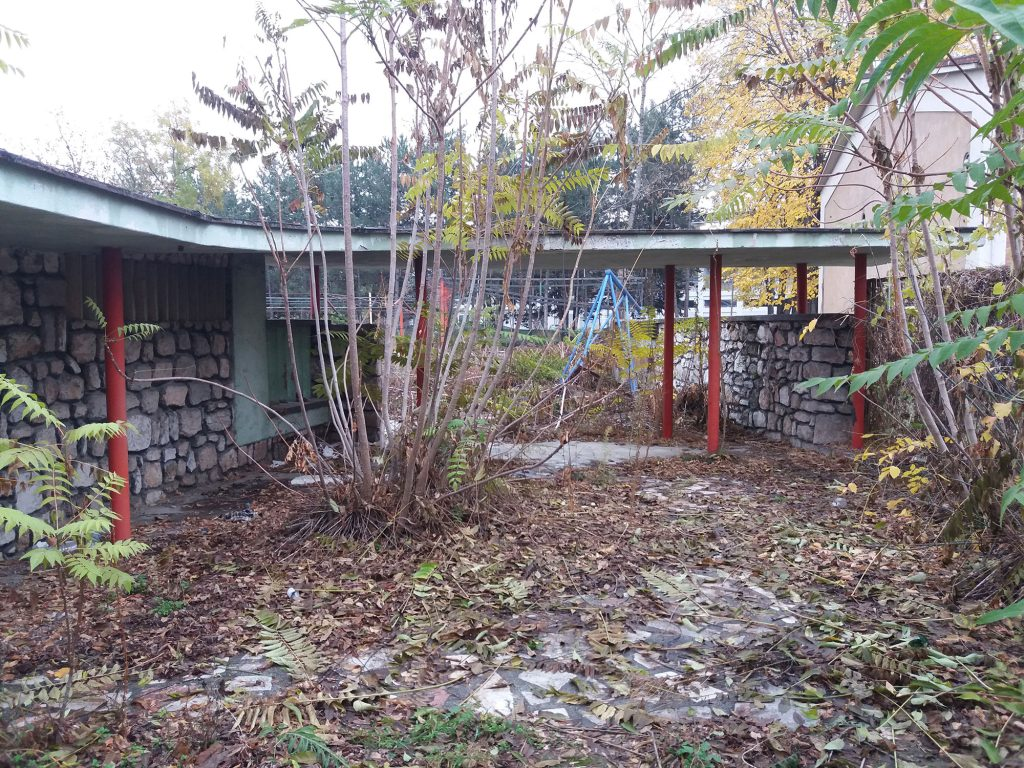
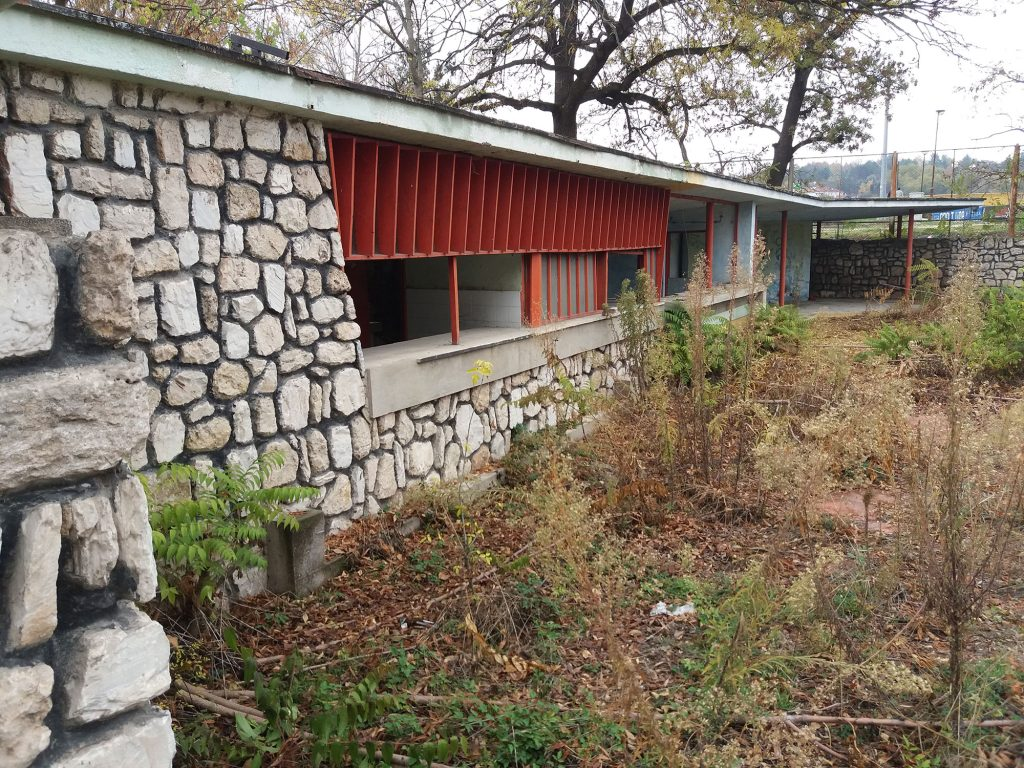
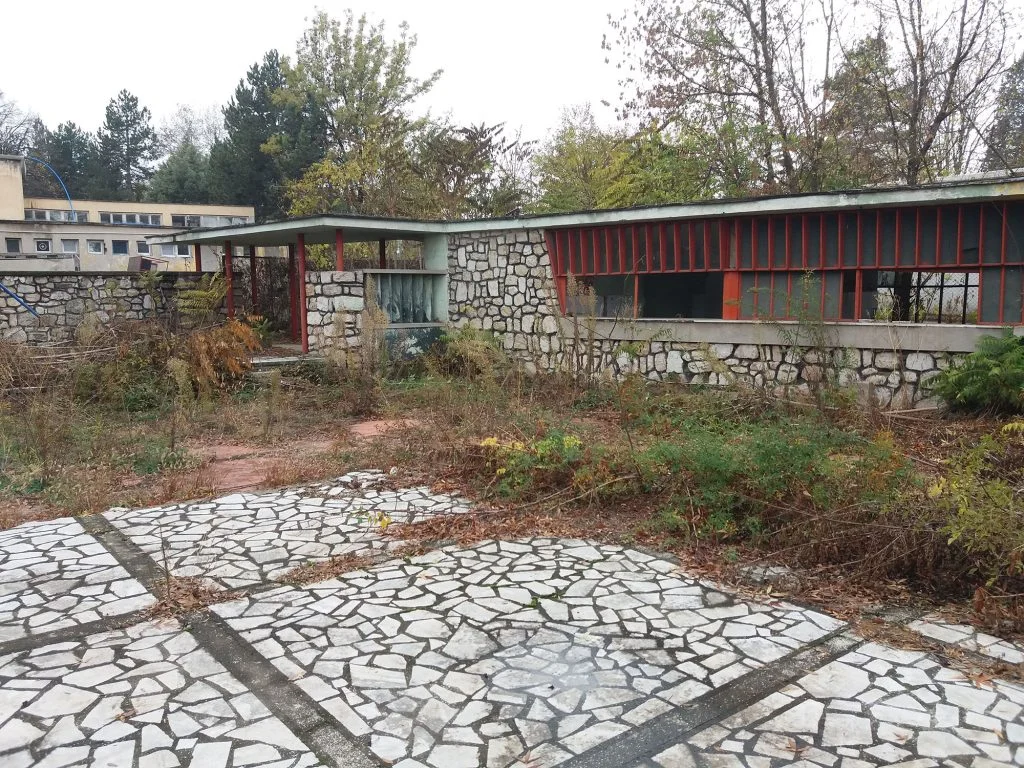
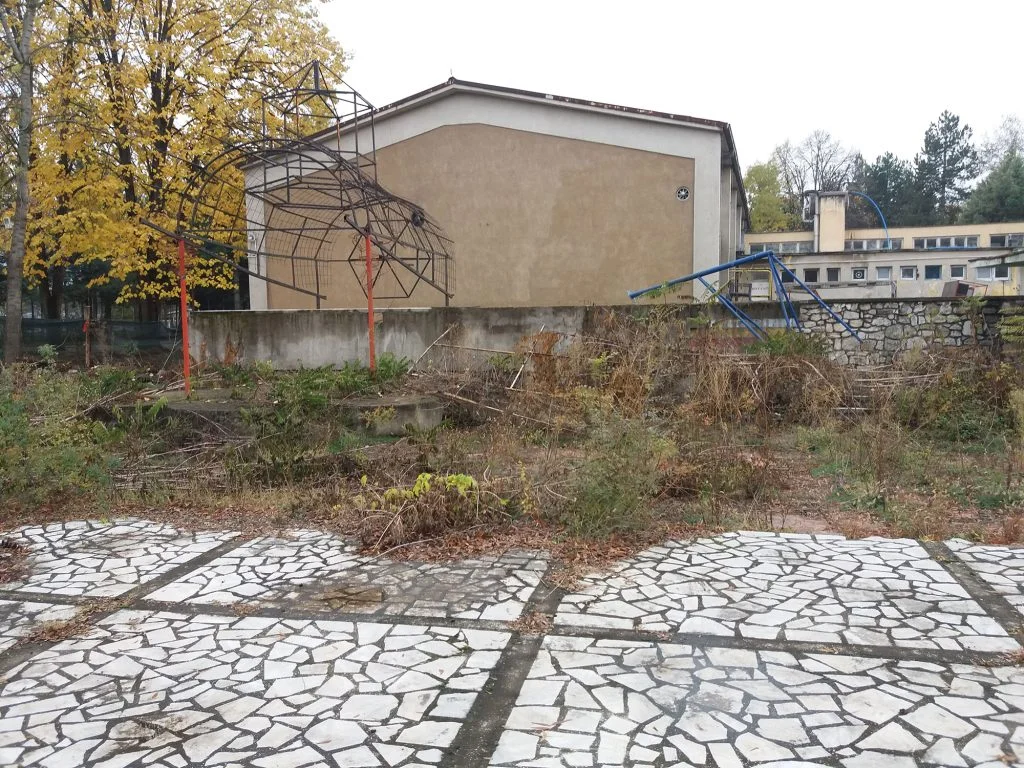
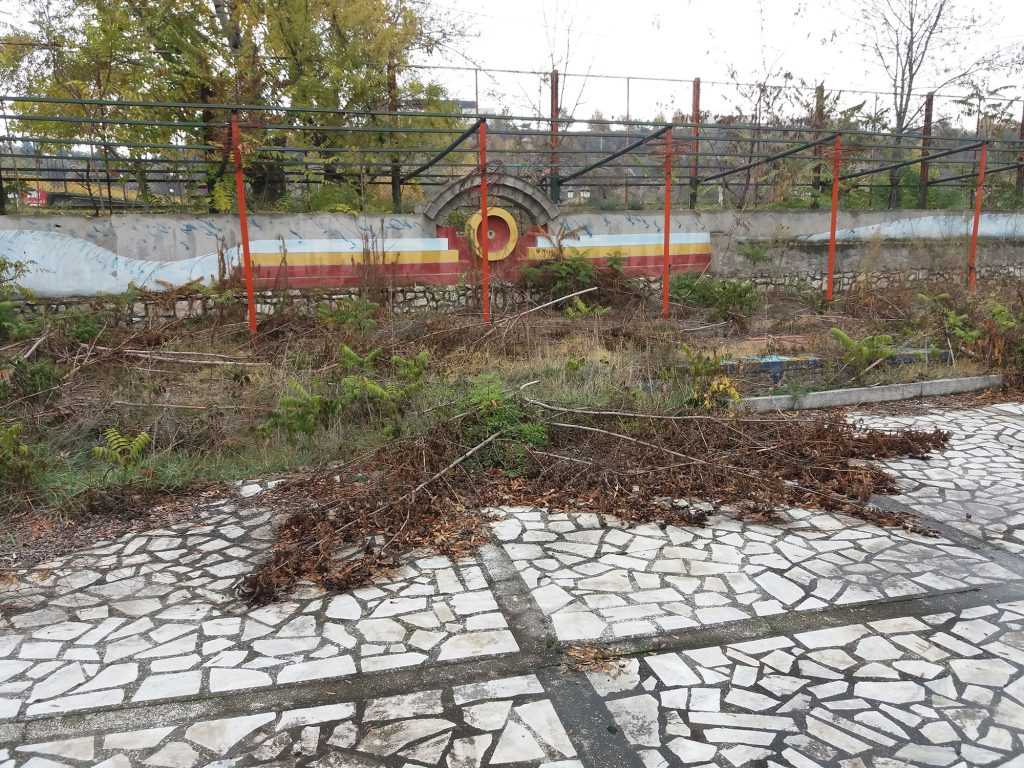
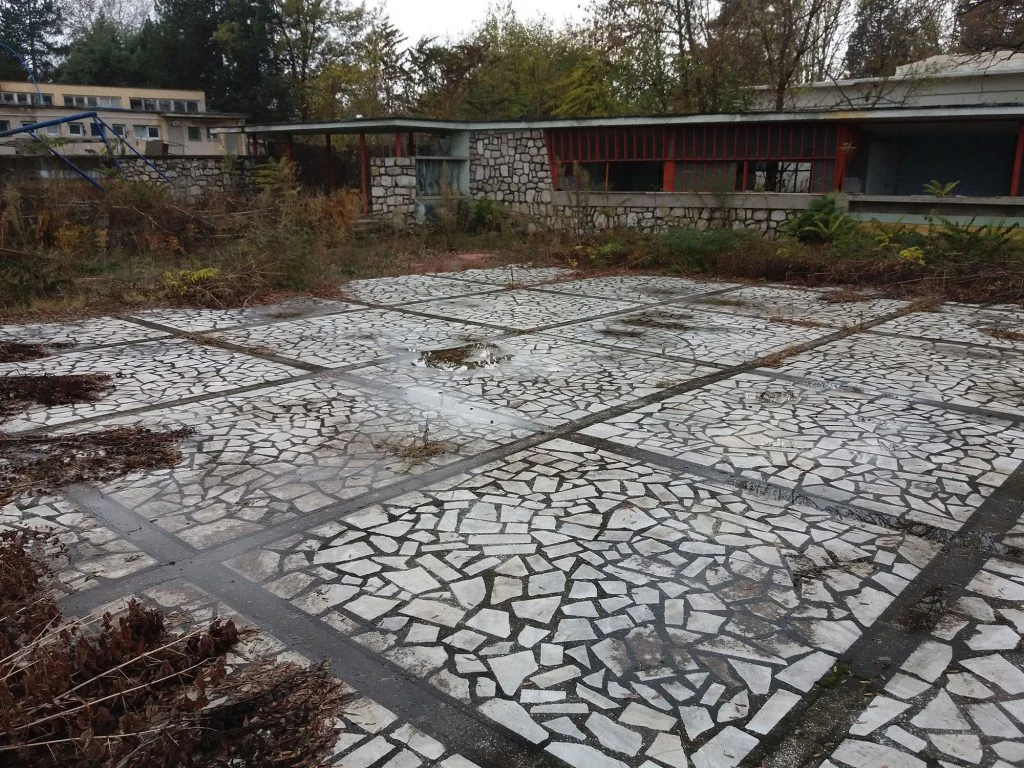
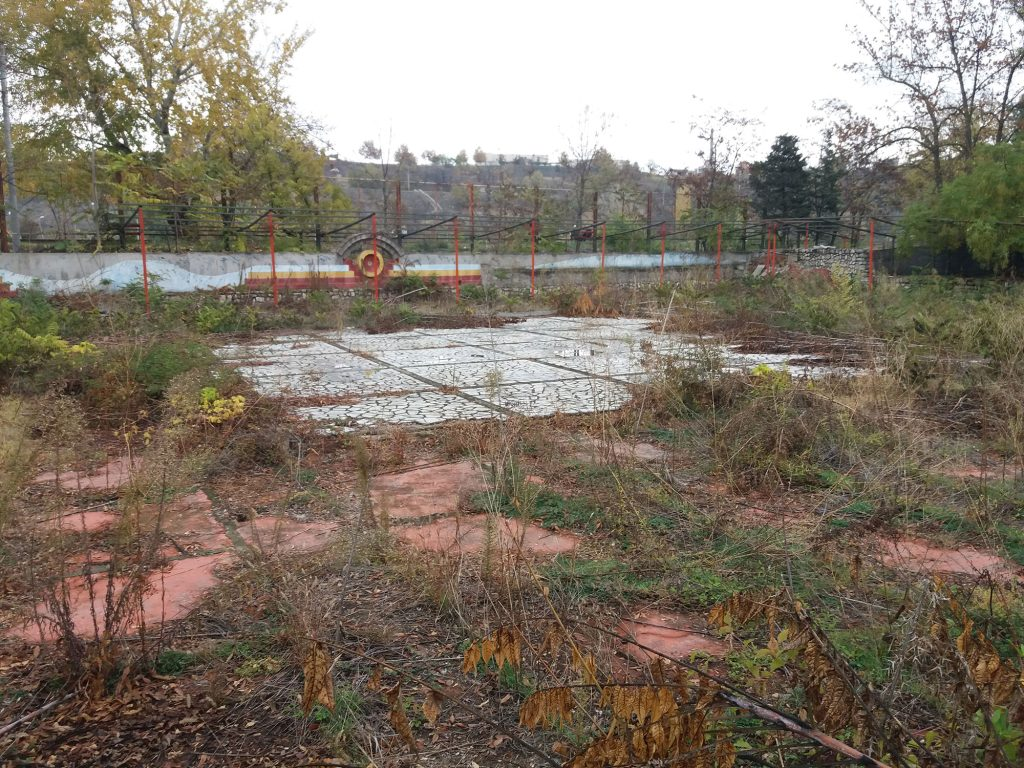
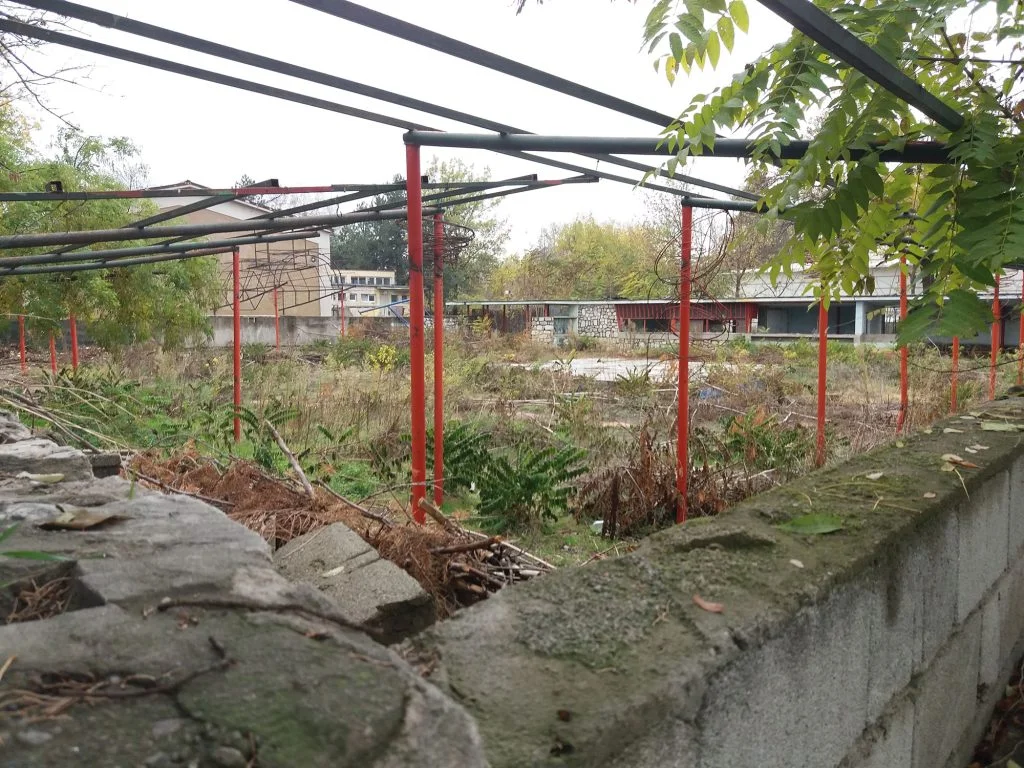
When I look at the photographs of Music Garden that I took in 2017 (less than ten years ago, though it feels like a hundred!), my first instinct is to try to recognise the place. The space is ruined, worn down and emptied of its former purpose (and of its soul). Of the place I remember, only the physical shell remains — and barely that.
But empty places have a strange quality: the less there is in the photograph, the more memory adds to it.
Where the images from 2017 show an abandoned space (being reclaimed by nature!), in my mind I can once again hear the music, the voices and the noise. I see the people standing around the bars, those moving closer to the stage, and the circle opening up in the crowd before the moshing begins.
Music Garden was an open-air summer club in City Park. Right next to “the military,” yet—at least in our minds—far enough away from everything we saw as official, respectable and controlled.
Our Music Garden
In my book 3 Minutes and 53 Seconds, about the role music has played in my life, I described Music Garden in the chapter “Ratamahatta—Sepultura (1996)” as follows:
At Music Garden, we could mosh to Sepultura’s Ratamahatta without getting our ribs broken or our heads torn off. An outdoor venue between Marakana, the former live music club, and the old miniature golf course in Luna Park, right next to “the military.”
That sentence probably captures the essence of the place—or at least what its essence was to me.
Music Garden was large and open. There was enough room for different groups to gather, pass one another by or mingle: metalheads, punks, rockers, rappers, and people who did not want to belong to any strictly defined group.
At first glance, our musical tribes were fairly divided. Each had its own bands, clothes, places and rules. But by the mid-1990s, those boundaries had begun to loosen. Music Garden was one of the places where those worlds could meet.
Rock was not the only music played there. There was punk and metal, but also rap, breakbeat and other sounds that struggled to find a place in the commercial discos and media of the time. In one of my memories from 1994, the club appears through the sound of the Beastie Boys’ “Sabotage”—a song that seemed made for a place like that: rap and punk at once, noise and pure energy.
We would often reach Music Garden only after crossing half the city. We would begin on the benches by the Cathedral, each with a zidarsko—a large bottle of Skopsko beer whose nickname literally meant “bricklayer’s beer,” because it was usually drunk by bricklayers and house painters after a hard day’s work, and by us before heading to the evening’s main destination—or with a bottle of Kavadarka wine, passed from hand to hand and poured into plastic cups in honour of the monks who, in centuries past, produced this elixir for the soul in their monasteries.
After a few litres, walking with steps that were somewhat unsteady but decidedly jaunty, we would set off in one of two directions: towards the City Wall, stopping at SF or Subway along the way, or in the opposite direction, towards the benches by City Park and the Fountain. Later, the Cathedral routine shifted to the little shop beside the live music club Zot—which Uroš Veljković reminded me was called Pingvin. There was a spot nearby, partly hidden behind a hedge, where we sat on beer crates and pondered the great mysteries of music and the world. Music Garden was not merely a point on the map. It was the final stop on any of these routes.
The Stage Where Bands Got Their Start
Back then, we did not think of ourselves as visiting a place that would one day become part of some kind of history. We simply went wherever there was good music, familiar faces and the possibility that something might happen.
It was only later, while preparing the “Alternative Skopje in the 1990s” map, that I began to understand how many bands had passed across the Music Garden stage.
In 1994, the band known at various times as Teritorijalna Odbrana, Social Deprived and, finally, Disclass played its first concert there. In the years that followed, the club hosted Arhangel, Čista Okolina, Benzona, T.B. Tračeri, Ripping Treatment, Ocean Pacific, Sanatorium, Holocaust, Nikeja, Earl Gray, Cyborg, Xavier Acid, Grow, Vision Pit, Frontal Cortex, Solomonov Pečat, Rok Agresori, Hellstrings and many others.
Today, we arrange these names into timelines, encyclopaedias and archival records. Back then, they were people we watched on an improvised stage, often with imperfect sound and under conditions that were far from professional.
But that was precisely what the scene was about. Not perfection, but the chance to perform.
One surviving memory of an Ocean Pacific concert describes a chaotic performance on an improvised stage made of warped sheets of plywood, held down by large rocks. The band does not appear on the printed programme of the festival at which it performed, which suggests that it was added later or that the running order had changed.
To me, that image seems like the most accurate portrait of the independent scene at the time: a few warped sheets of plywood, large rocks to keep them from falling apart, and a band that went out and played anyway.
The Seven Days of Strip & Sound
The strongest surviving physical record of the club is a ticket from the Strip & Sound festival, held from 1 to 7 September 1995. The comics exhibition took place at the Museum of the City of Skopje, while the concerts began at 10 p.m. at Music Garden.
According to Igor Anđelkov’s recollection, the festival was initiated by Goran Tanevski of Mizar. The full music programme is printed on the back of the surviving ticket (visit Igor’s excellent blog, Heroj na eden den, to see it!).
On 1 September, Benzona played its first concert, sharing the bill with Arhangel, Nikeja, Earl Gray and Balkan Ekspres. The following day, Čista Okolina performed alongside Cyborg and Xavier Acid. On 3 September, T.B. Tračeri played before a Skopje audience for the first time. The rest is history!
Over the course of seven days, the festival featured a large number of local and regional bands. There was rock, punk, metal, rap, experimental music and a closing jam session. Today, a programme like that looks like a cross-section of an entire generation. Back then, it probably seemed like just another chaotic and exciting week in the city. (P.S. Most of the trendy crowd went to the festival because of the band Naked. I’ll leave it to you to find out why 🙂)
“Ratamahatta,” Mosh Pits and the Police
For me, the most vivid image of Music Garden remains tied to 1996 and Sepultura’s “Ratamahatta.”
From the outside, a mosh pit can look like a senseless brawl. But for the people inside it, there were rules. You fall; someone picks you up. You hit and get hit, but the point is not to truly hurt anyone. In a large enough space, you could move, dodge a blow or leave the circle when it became too much. After my bad experiences in the mosh pits at Skopje’s one and only mighty T-Festival, Music Garden was a welcome relief.
That is why I wrote in the book that we could mosh there without getting our ribs broken or our heads torn off. Of course, there were no guarantees. It was more a feeling that, for a moment, we had a space where we could be loud, physical, clumsy and free.
But that freedom usually lasted only until the police arrived. The music would be cut off because of the late hour and the noise. Much larger commercial and “turbo-folk” discos operated in the immediate vicinity, so it seemed to us that the same rules did not apply to everyone.
Later, I wrote in the book:
Music Garden met an inglorious end under pressure from the combined forces of the police and the turbo-folk crowd, but the live shows at Marakana and Lady Blue, including the ever-present Day Off, more or less kept our rock-and-roll consciousness alive.
Today, I would add a footnote to that sentence.
It is true as a personal feeling and as memoiristic irony, but not as an official explanation of the closure. The police did indeed stop the music, but I have found no document proving that police pressure was the direct cause of the club’s demise.
When we write the history of our own youth, it is easy to mistake a feeling for a fact. The map taught me to keep the two apart without erasing the truth contained in memory.
The Final Summer: When the Music’s Over
Music Garden was definitely still operating in 1997. The Kumanovo thrash metal band Holocaust released a live recording entitled Live at Music Garden (1997).
Sanatorium performed there on 8 July that year. The concert has been described as a frenetic summer performance and the band’s last appearance before its withdrawal from public view at the time. It is the latest precisely dated event I have found so far.
The club may also have operated during the summer of 1998, but I currently have no independent documentary evidence to confirm this. Nor do I know the exact year in which it closed. By then, I had already left to study in Italy.
And then the place gradually disappeared from the city’s routes. First, you stop going there. Then you stop checking what is happening to the space. Finally, one day, you discover that the place still packed with people in your mind has, twenty years later, long stood empty.
Photographs of the Place After the Music
The photographs from 2017 do not show the club. They show what remained after it.
There is no audience, no stage and no music. There is only a ruined and worn-out space that can no longer tell its own story.
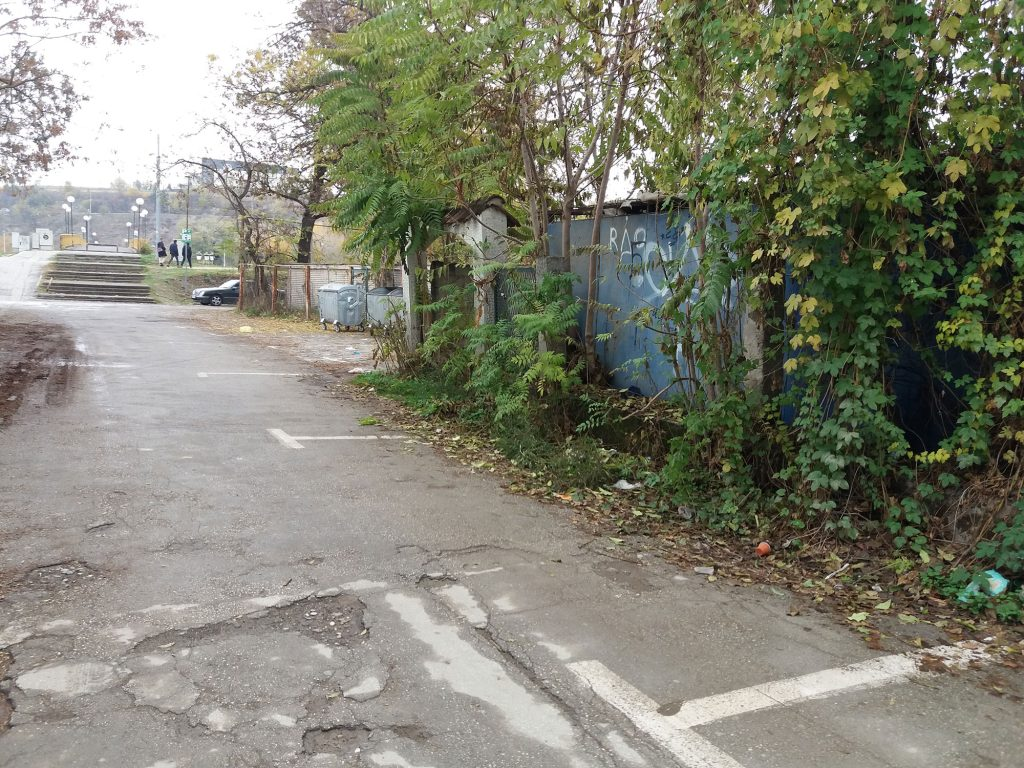
When I look at the photographs, I cannot say that I am looking at Music Garden. What I see is more like a negative image of Music Garden—empty spaces into which memory restores the people, the bars, the bands and the sound.
That is precisely why these images matter. They document the final physical layer of a vanished place. Not its finest days, but its slow disappearance.
What Do We Still Not Know?
Today, we have a timeline for Music Garden, a list of numerous bands, a festival ticket, several published recollections and photographs of the space after the club closed.
But we still do not have enough photographs of the club while it was operating.
We do not know who devised the regular programme, who the DJs were, how the stage and bars changed over time, or exactly what happened during the final summer. We do not have a complete collection of posters, flyers and tickets. Such a collection probably never existed—but fragments of it may still be sitting in someone’s drawers, photo albums or old boxes.
The complete archive entry for Music Garden can be found on the interactive map “Alternative Skopje in the 1990s”. You can also share the specific location directly from the map—open the entry and select the share option.
Not much of Music Garden may remain in the physical space. But enough of it remains in the people.